
 English
 中文简体
中文简体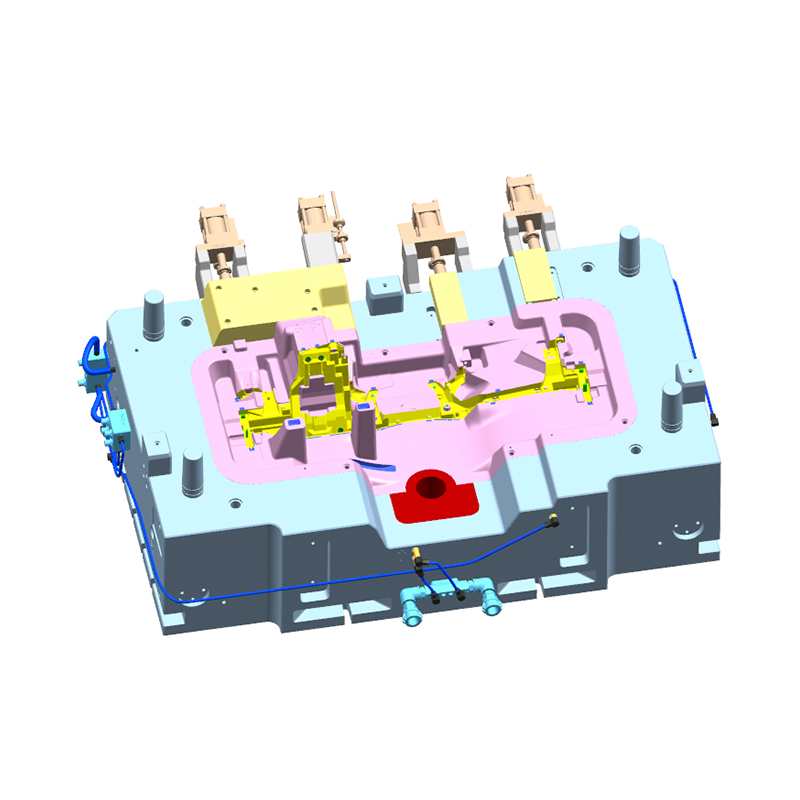



Contact Information
-
 Wangshan Road, Jiangbei District, Ningbo, Zhejiang, China
 -
 86-135-64796935

Get A Quote
Typical Die Casting Mold Cost: Price Ranges, Cost Drivers & How Quotes Are Calculated
2026-08-13
Content
A small zinc alloy die casting tool for a simple part can cost roughly US $3,000 to US $8,000. A medium-size aluminum mold with two cavities and basic water cooling usually lands between US $15,000 and US $50,000. A large automotive or new energy vehicle structural mold, of the type used for a motor housing, transmission case, or battery tray, can pass US $100,000 quickly, and versions with large slide systems and conformal cooling have been quoted above US $300,000. The most useful answer to the question is therefore not one number but a band. Plan for US $3,000 at the low end, US $20,000 to US $60,000 for most production aluminum tooling, and considerably more for complex automotive dies. This article explains what moves a quote from the bottom of that band to the top, why the range exists, and how suppliers actually calculate the number you receive.
A die casting mold is not a catalog product. It is a custom precision tool that begins with a set of customer part drawings, is machined from forged steel blocks, and is tuned through trial shots until it produces parts within specification. Because the geometry, alloy, production volume, surface finish requirements, and quality expectations change with every project, the price of the mold changes with them. Suppliers do not pull a price from a list; they quote it from a structural analysis of the part and the production program behind it.
The part geometry determines the mold's outer dimensions, the number of slides and cores, the depth and shape of the cavity, the gate position, and the complexity of the cooling channels. A flat, box-shaped part with open sides is one of the cheapest things to tool. An enclosed housing with internal ribs, bosses, holes perpendicular to the parting line, and undercuts that require moving slides costs many times more. The steel volume, machining time, and the risk of casting defects all increase with geometry difficulty, and suppliers build that into the quote.
It helps to separate the mold itself from the parts it produces. The mold is a capital expense, paid once, and then amortized over the lifetime of the production run. The unit price of the casted part reflects cycle time, material, labor, and overhead, but not the full cost of the tool. Buyers who compare mold quotations without also comparing part price, planned volume, and tool life will draw the wrong conclusions. A cheap mold that requires frequent repairs or produces inconsistent parts can raise the total cost dramatically. The mold's actual value is measured in shots, not in its initial invoice.
To understand why quotes differ, it helps to know what the supplier has to pay for. A mold quotation is built from five main blocks: engineering, steel, machining, standard components, and sampling. Each block has its own cost structure and risk profile.
The engineering phase includes gate and runner design, cooling calculation, draft analysis, shrinkage compensation, and a mold flow simulation for demanding parts. On a complex automotive casting, the designer also defines the slide actuation method, the ejection sequence, and the thermal balance of the mold. Design takes hours, and those hours are charged. On simple molds engineering may account for 5 to 10 percent of the quote; on complex thin-walled automotive parts with tight tolerances, the share can reach 15 percent or more. Engineering also carries hidden risk: a mold that is poorly designed may require rework after the first trial, which is why experienced suppliers invest in simulation rather than guesswork.
Mold steel is the largest single material cost. The mold base, cavities, inserts, and slides are machined from blocks of hardened tool steel. For aluminum die casting, H13 and similar hot-work grades are the norm. A typical mid-size mold uses between 2 and 8 tons of steel, and the cavity inserts are often delivered as forged and pre-machined blocks. The price of each block depends on grade, size, and the supplier's heat treatment. High-end grades with superior thermal fatigue resistance cost more, but they extend tool life and reduce maintenance cycles.
The cavity is shaped by CNC milling, then finished by EDM or wire cutting for sharp corners and deep details. The time required depends on the surface area to be cut, the hardness of the steel, and the tolerance to be held. High-hardness steels cut more slowly and wear more tools. Polishing, if a high-gloss surface finish is required on the casting, adds manual labor. Machining is typically the most expensive block in the quote, sometimes 30 to 40 percent of the total.
Slides, cores, ejector pins, guide pillars, water connections, and the parting plane must all be fitted and aligned. The die must close on the injection machine with the correct locking pressure, and the halves must mate evenly so that flash does not form. Fitting is a craft operation. It requires skilled toolmakers, and it is difficult to compress into a schedule.
Most suppliers include two or three trial rounds in the quote. The mold is mounted on a real die casting machine, test shots are made, the parts are measured, and corrections are made. Material is consumed, machine time is rented, and engineers analyze the results. If the trial reveals a dimensional problem or a filling pattern issue, the mold goes back to the shop for modification. Some suppliers quote trials as an optional line; others include them in the total. Always confirm what is inside the number.
Engineering, steel, machining, and sampling explain what goes into a quote, but four specific design and production decisions dominate the final price. In order of impact, they are part complexity, cavity count, mold size, and cooling system design.
Complexity is the classic price multiplier. Consider what happens when a part has an undercut, which is any feature that prevents direct ejection from the mold. The undercut forces the designer to add a slide or collapsible core that moves with hydraulic or mechanical actuation. One slide adds thousands of dollars to the mold, plus a maintenance point for the entire life of the tool. Two slides can add tens of thousands. Internal threads, snap-fit hooks, and angled features add further tools. Every feature that complicates the ejection direction increases the number of moving parts in the mold, the machining time, and the risk of failure over 100,000 shots.
On the other hand, features that align with the parting line add little cost. Draft angles, generous radii, and uniform wall thickness do not require extra mechanisms. The part designer has more influence over mold cost than the mold maker does. A good supplier, or a good design-for-manufacturability review, can identify the cost-driving features before any steel is cut.
Cavity count decides how many parts are produced per shot. One cavity yields one part per cycle; two cavities yield two; four yield four. More cavities raise the mold price because the machining volume and steel size grow, but they lower the unit cost when the order volume is high. A mold with two cavities may cost 60 to 80 percent more than the same mold with a single cavity, not double, because the base and clamping system are shared. Suppliers calculate the optimal cavity count from the annual production target, machine capacity, and part weight. If you only need 20,000 parts a year, a single-cavity mold is usually the rational choice. If you need 500,000, the same logic pushes toward two or four cavities.
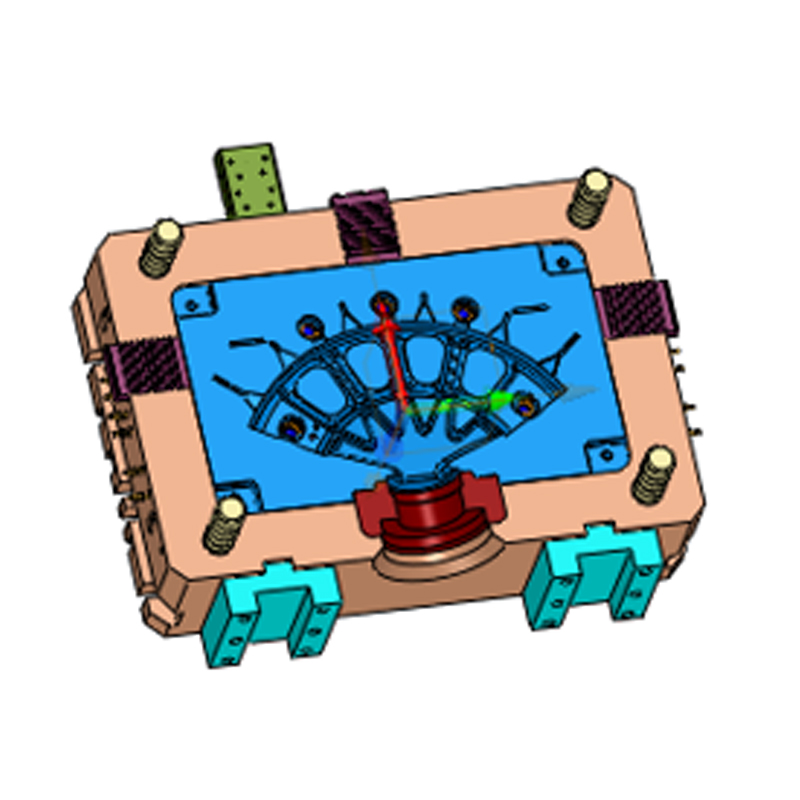
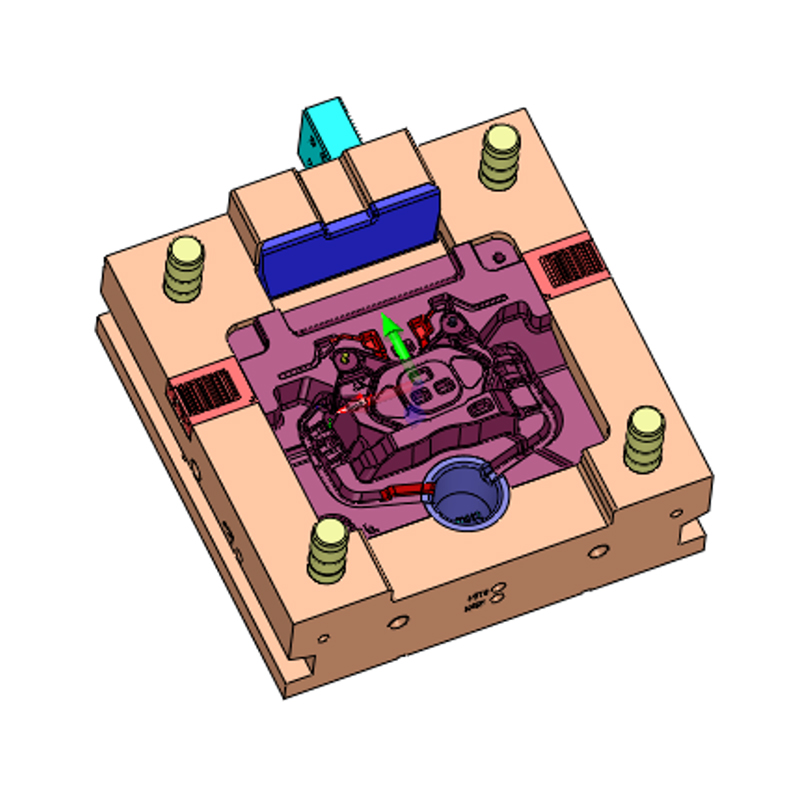
The outer size of the mold is set by the part's projected area, the number of cavities, and the runner system. Mold size determines which tonnage of injection machine is required, and that in turn affects the die casting plant's capacity and hourly machine rate. Larger molds cost more in steel, machining, heat treatment, and handling. The correlation is not perfectly linear, but it is strong. A small 150-ton hot-chamber machine for zinc parts might accommodate a mold that is only 350 mm square; a 2,200-ton cold-chamber machine for a motor housing requires a mold the size of a small car. Between these two points the tooling cost can change by a factor of 30. A good reference example is the 800t aluminum alloy diecast box, which sits in the medium-to-large segment of the product mix and demonstrates how much steel and insert design a serious aluminum tooling project involves.
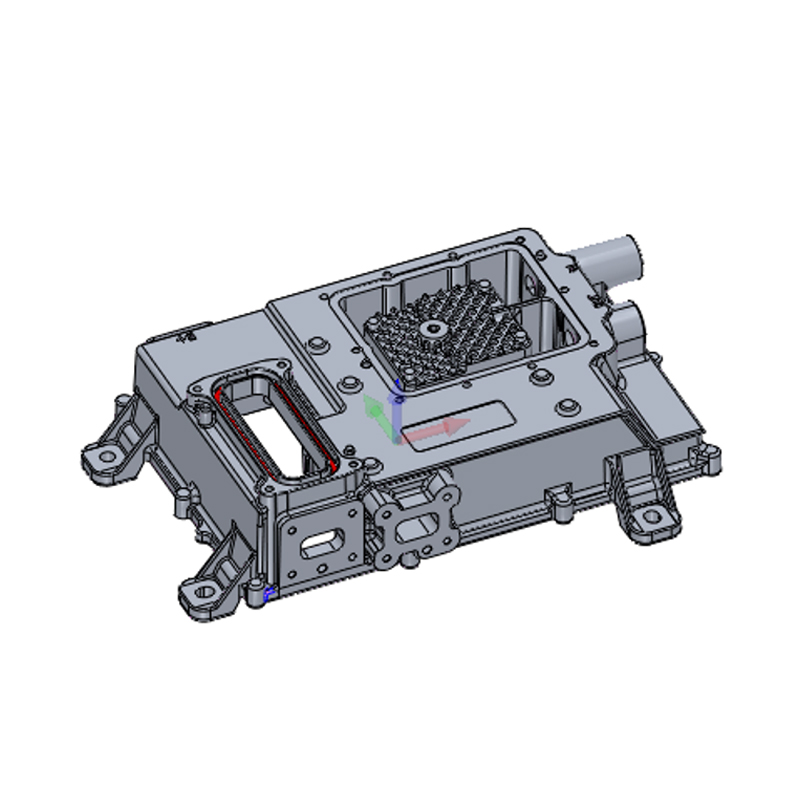 Custom 800T Aluminum Alloy Die-Cast Box Factory, Manufacturers - Ningbo NKT ToolNingbo NKT Tooling Co., Ltd. is China 800T Aluminum Alloy Die-Cast Box Manufacturers and Custom Factory, details:The aluminum alloy die-c...View Product →
Cooling is the least visible cost driver and one of the most important for productivity. The rate at which molten alloy solidifies determines the cycle time, and therefore the cost per shot. Simple straight-drilled cooling lines are inexpensive and work for flat parts. Contoured or conformal cooling channels follow the shape of the cavity and reduce hot spots, but they require brazing, additive manufacturing, or complex drilling strategies, all of which add cost. In high-volume production, a mold with superior cooling can shorten the cycle by several seconds, paying back its higher price within months. For low-volume production, that calculation rarely works, and a simpler cooling system is more economical.
Mold steel selection affects both the upfront quote and the long-run cost per part. Hot-work tool steels like H13, known in Europe as 1.2344, are the standard for aluminum die casting because they resist thermal cracking, erosion, and softening at high molten-metal temperatures. Premium double-melted or vacuum-degassed grades offer better isotropy and longer die life, but they carry a premium of 10 to 30 percent in steel cost. For buyers, the right question is not only what the steel costs, but how many shots the cavity will survive before heat checking appears.
Zinc alloys are cast at significantly lower temperatures, so a zinc mold may be made from a pre-tempered steel such as P20 or 1.2738 and can still last several hundred thousand shots. Aluminum alloys reach around 610°C at the injection gate, and the mold surface repeatedly sees severe thermal shock, so the die inevitably develops heat checking after a certain number of cycles. Tool life for an aluminum cavity insert is commonly rated at 60,000 to 150,000 shots, after which the insert is either repaired or replaced. Because the cavity insert is the most expensive single component, the life of the steel directly sets the maintenance budget.
Supplementary treatments also matter. Nitriding, PVD coating, and oxide treatments reduce soldering and erosion at the cavity surface, improving release and extending life between overhauls. These processes add a few percent to the mold price and can be well worth the money on parts with deep cores or high surface requirements. The whole subject of metallurgy is deep enough to deserve its own discussion, and we have written a separate page on how to choose the right material for aluminum alloy die casting molds that covers the steel grades, coating choices, and their effect on tool life.
The alloy you cast is not a material selection alone; it sets the thermal and mechanical design envelope of the tool, and therefore the budget required to build it. The same part geometry can have meaningfully different mold costs in zinc, aluminum, or magnesium.
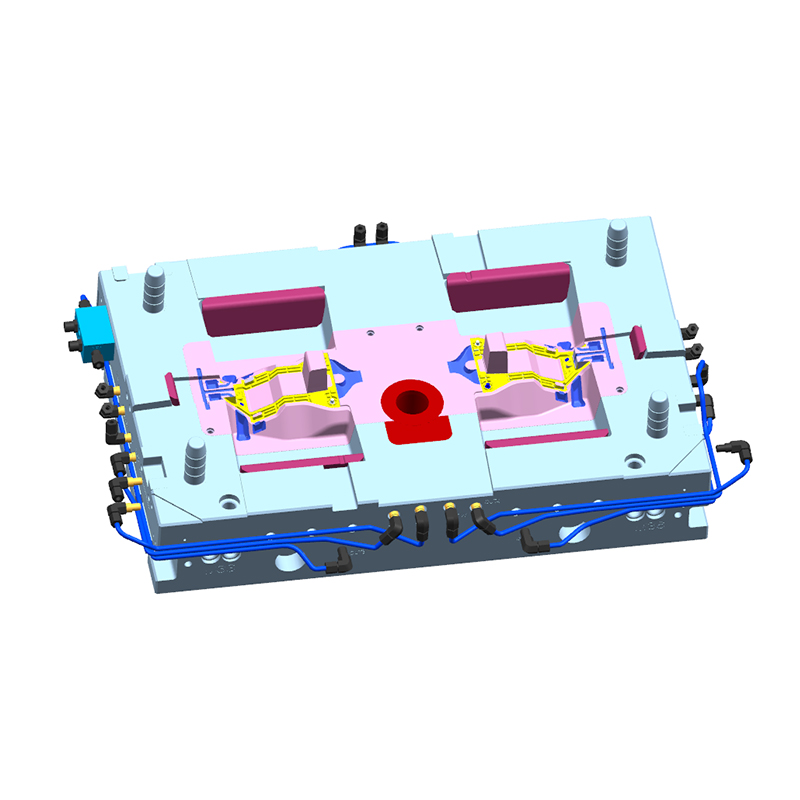
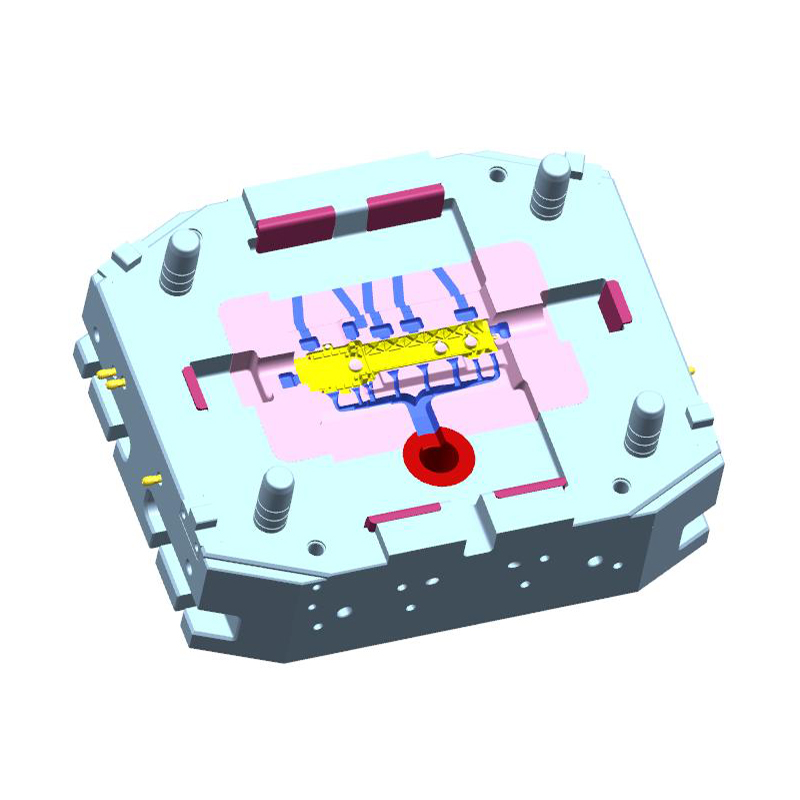
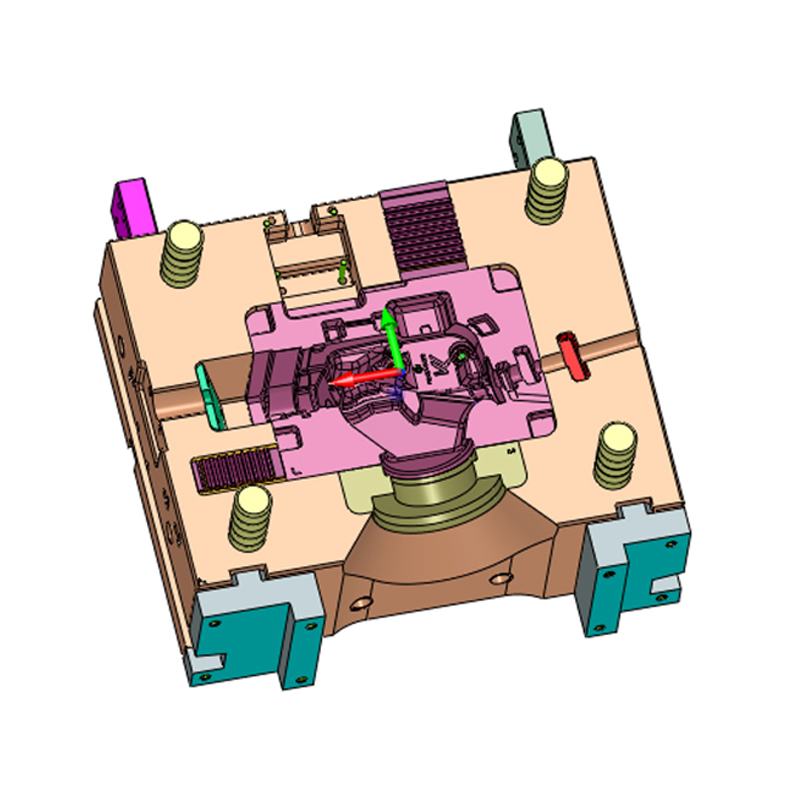
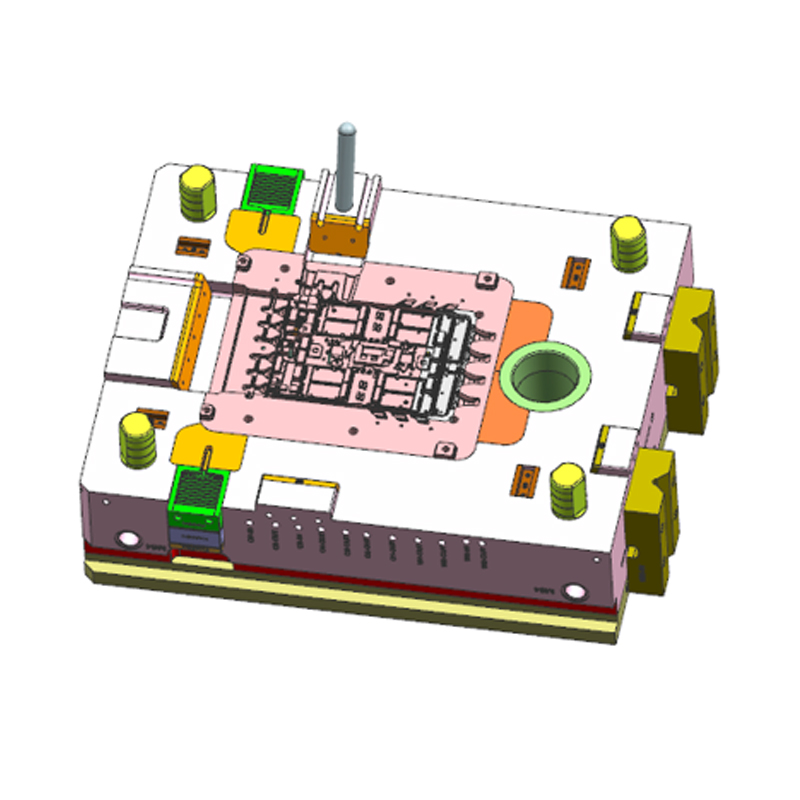
Zinc alloys melt at about 390°C, well below the temperatures that stress hot-work mold steel. A zinc mold can be made from a less expensive pre-hardened steel, the cooling layout can be simple, and hot-chamber machines deliver very short cycle times. For connectors, locks, small housings, and decorative parts, a single-cavity zinc tool can come in below US $8,000. Multi-slide zinc molds are more expensive, but they remain economical compared with their aluminum equivalents. In practice, compact production tools such as the 150t hot-chamber die-casting mold we build for zinc parts represent the most affordable entry point into the die casting process.
 Custom 150T Hot Chamber Die Casting Mold Factory, Manufacturers - Ningbo NKT TooNingbo NKT Tooling Co., Ltd. is China 150T Hot Chamber Die Casting Mold Manufacturers and Custom Factory, details:The 150T Hot Chamber Di...View Product →
Aluminum alloys are cast at 610 to 700°C and demand hot-work steel, carefully designed cooling, and a robust ejection system. A single-cavity aluminum mold for a simple bracket may cost US $18,000 to $35,000, while a two-cavity mold for an automotive housing with slides and inserts will reach US $50,000 to $90,000. The size of the part is the decisive scale factor. A large enclosed housing such as the 800t aluminum alloy diecast box mentioned earlier is typically produced in a mold measuring well over one meter across, with multiple inserts, a heavy wear plate system, and a cooling network connected to a die-temperature control unit. That tool is a multi-ton assembly, and its price reflects the steel volume, machining hours, and handling requirements of such a large die.
Magnesium's casting temperature is close to aluminum's, so the mold steel and cooling requirements follow similar patterns. The main difference is the need for high-vacuum systems and tighter process control, especially for thin-walled automotive parts. The mold price is comparable to aluminum tooling of the same size and complexity. Magnesium molds also tend to require more attention to surface treatment and sealing because magnesium is chemically reactive in its molten state. If the part is a lightweight structural component, such as a steering bracket or a cross-car beam, the tooling cost is often justified by the weight saving it enables.
Most professional mold suppliers build a quotation from a bottom-up cost estimate rather than a guess. The procedure follows the same logic across the industry, even if the specific numbers vary from shop to shop.
First, the supplier reviews the part model and identifies the parting line, slides, cores, draft, gate location, and ejection requirements. From this analysis an engineer estimates the number of mold design hours and prepares a preliminary mold configuration. Second, the mold frame size is determined from the projected area and depth of the part. The supplier calculates the volume of steel in the base and inserts, multiplies by the per-kilo cost of the selected grade, and adds heat treatment. Third, the machining time is estimated: CNC roughing, semi-finishing, finishing, EDM, wire cutting, and polishing. Those hours are multiplied by shop rates. Because these rates include machine depreciation, labor, and overhead, a mold maker that has invested in advanced five-axis machining will often quote higher hourly rates but fewer hours.
Fourth, standard components, including ejector pins, guide pillars, return pins, sprue bushings, water nozzles, limit switches, and slide guides, are added at catalog price plus a markup. Fifth, assembly and fitting hours are applied. Finally, the supplier adds the cost of trial shots, inspection, and project management, then applies an overhead and profit margin.
The result is a number that is only as good as the completeness of the part information. A partial drawing, an undefined alloy, or an unstated surface finish requirement will produce a provisional quote. When buyers provide complete CAD data, material grade, annual quantity, and machine tonnage preference, the quote becomes much more reliable and the preparation time shortens.
Buyers frequently ask why a particular mold is so expensive when the part itself appears simple. The answer appears when the tooling cost is spread over the number of casted parts produced. A US $40,000 aluminum mold becomes a per-part cost of US $0.80 at a production run of 50,000 parts, and US $0.08 at 500,000 parts. The mold is an investment whose cost is recovered through the low unit cost of high-pressure die casting.
| Total production volume | Mold cost per part | Context |
|---|---|---|
| 10,000 parts | US $4.00 | Low-volume prototyping or niche product |
| 50,000 parts | US $0.80 | Typical mid-volume automotive or industrial run |
| 100,000 parts | US $0.40 | High-volume consumer or automotive component |
| 500,000 parts | US $0.08 | Mass production, where die casting is fully economic |
The table illustrates why mold price should never be considered in isolation. If the planned volume is only 5,000 pieces, CNC machining of billet parts may be cheaper, and sand casting tooling could be cheaper still. If the planned volume is 200,000, any extra dollar spent on two cavities, superior steel, or better cooling can reduce the cycle time and the unit cost by a meaningful margin.
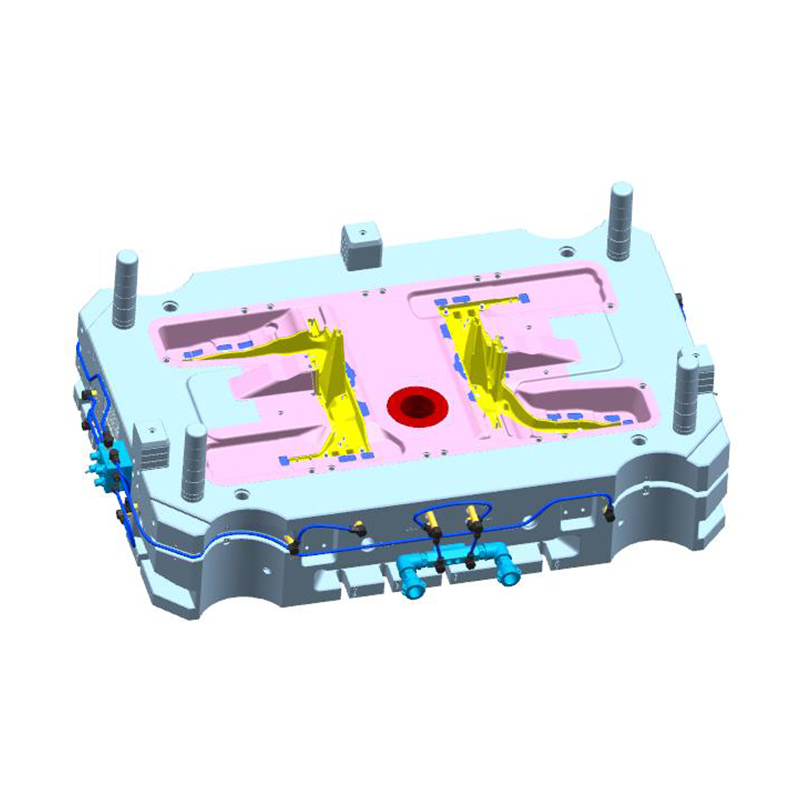
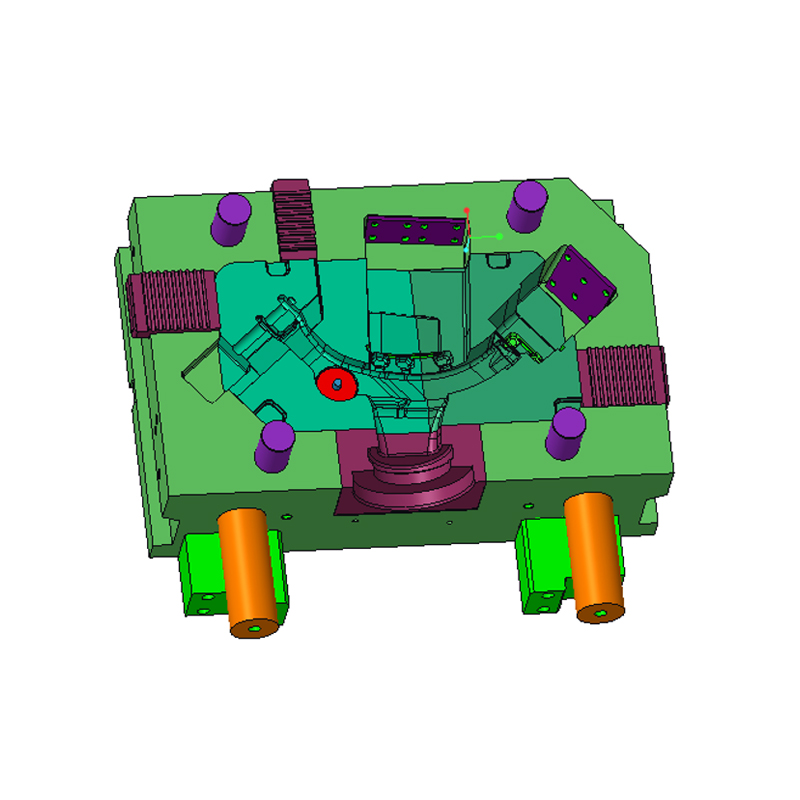
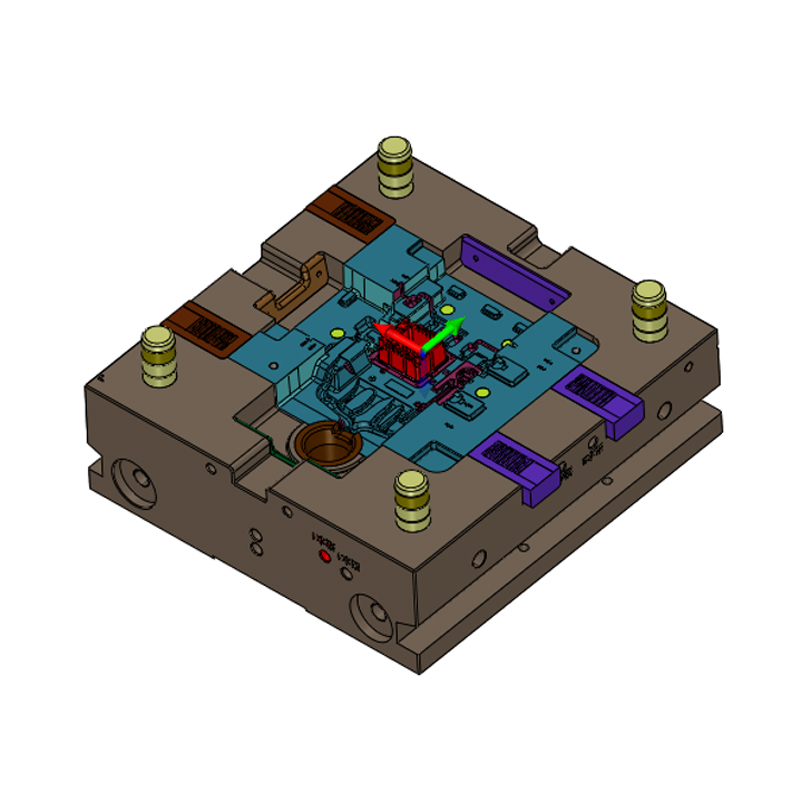
For electric vehicle drivetrains specifically, the scale trend is unmistakable. Housing and structural parts such as the 2200t aluminum alloy die-casting motor housing are produced in high quantities on large machine cells, and the mold cost, while a six-figure line in the project budget, is quickly diluted by the hundreds of thousands of units produced from the tool. The same logic applies to transmission housings, battery compartment plates, and cooling jackets, where high annual demand makes a robust, expensive tool the most economical choice over the life of the program.
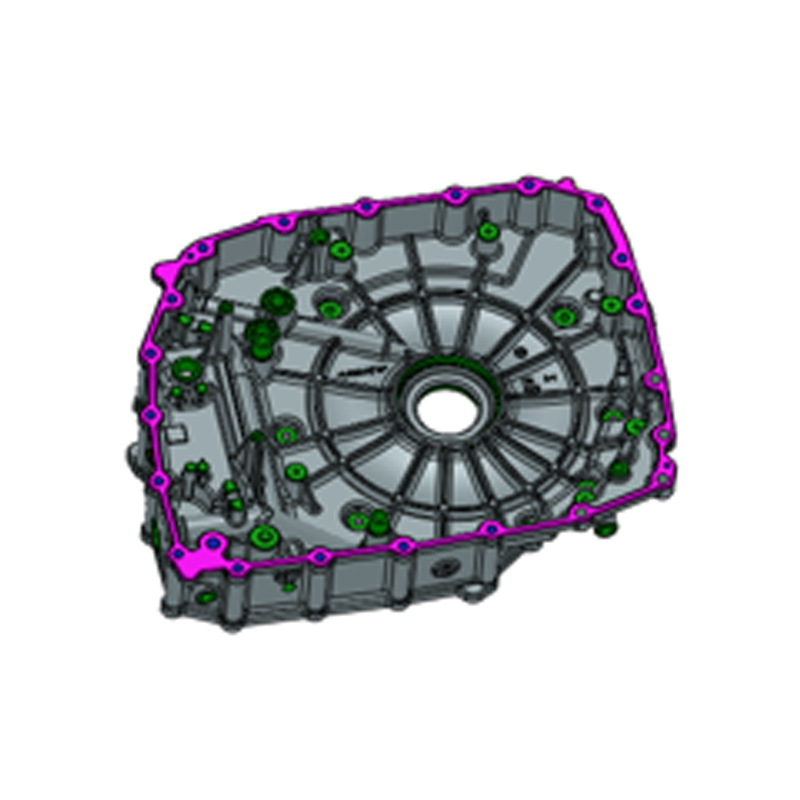 Custom 2200T Aluminum Alloy Die-Casting Motor Housing Factory, Manufacturers - NNingbo NKT Tooling Co., Ltd. is China 2200T Aluminum Alloy Die-Casting Motor Housing Manufacturers and Custom Factory, details:The 2200T ...View Product →
When read against alternatives, the mold cost of die casting appears in a fairer light.
Sand casting tooling is much less expensive. Patterns and core boxes for sand casting can be produced for a few thousand dollars, and the process tolerates low volumes. But each sand-cast part requires more material, more finish machining, and more inspection, and the production rate is far lower. When volumes grow past a few thousand parts per year, the per-part cost advantage of die casting normally overwhelms the higher mold investment.
CNC machining avoids tooling almost entirely in a machined-from-billet approach. The absence of a mold fee makes machining attractive for one-off parts and very small batches. But the recurring part cost is much higher because of material waste, machine hours, and manual labor. On quantities around 1,000 to 2,000 parts, the cost curve crosses, and die casting becomes cheaper even after the mold is included. For parts of 2,000 to 10,000 units per year, the comparison becomes tight, and the decision depends on geometry, material, and finish requirements.
Other casting variants, such as low-pressure casting or squeeze casting, have their own tooling rules. Squeeze casting, often used for high-integrity structural parts, typically requires more robust and more expensive tooling than ordinary high-pressure die casting. The trade-off is higher mechanical properties and better pressure tightness in critical applications. Each process has a break-even point that depends on part geometry and volume, so compare total costs rather than the upfront tooling fee alone.
Most of the mold price is locked into the part design before any supplier sees it. A design-for-manufacturability review is a cost-reduction tool that pays for itself several times over. These are the areas with the highest leverage.
Beyond part design, the clearest savings come from matching the tool to the actual annual volume. A two-cavity mold costs more, but if you will only use 20,000 parts per year, the extra cavities will sit idle. Select the machine tonnage early; if you already own a 800-ton or 1,650-ton machine, telling the supplier the exact model allows them to design the mold base to that platen and avoid unnecessary steel.
Finally, consolidate the information in the RFQ. Define the alloy, the coating requirement, the sampling standard, the production machine if it is fixed, and the expected delivery timeline. A complete RFQ shortens quoting time, avoids assumptions, and allows the supplier to optimize the tool rather than add a risk premium for uncertainty.
The quote is essential, but it is not the whole picture. The actual delivered cost of a mold includes its failure modes and maintenance burden. Whenever you evaluate a die casting mold supplier, ask the following.
The answers reveal whether the supplier is quoting a mold or a production solution. A serious mold maker will discuss shot cycles, cooling effectiveness, and total cost per part rather than only the price of the tool. It also helps to ask about the supplier's history with similar projects. A mold for a safety-critical aluminum component is the sum of thousands of small decisions, and experience with the same class of parts measurably reduces the risk of a late and expensive revision.
For reference, understanding where your supplier sits in the industry matters as well. A company with its own engineering history, a modern machine shop, and a documented track record in high-pressure die casting molds is in a stronger position to manage those risks. Our company background is described in detail on the about page, including the progression from a die design studio to full-scale mold manufacturing for aluminum, magnesium, and zinc alloys.
The typical cost of a die casting mold spans from a few thousand dollars for simple zinc tools to a few hundred thousand dollars for large automotive aluminum structures. The spread is normal and expected. Your own project's position within that range is controlled by part complexity, the chosen alloy, the cavity count, and the production volume. Every supplier computes mold cost from the same functional blocks: engineering, steel, machining, components, assembly, and sampling. The cheapest quote is not the same as the lowest total cost, and the mold's real value is captured in shots, tolerances, cycle time, and maintenance intervals.
To get an accurate and competitive quote, complete the part design, define the material and surface requirements, state the annual volume, and approach suppliers with full information. The time invested in design-for-manufacturability work, and in matching the tooling capacity to the actual production need, will reduce the mold price more than any negotiation tactic. When the mold is well engineered for the casting alloy and the part volume, it becomes a durable production asset rather than a line item to minimize.
Wangshan Road, Jiangbei District, Ningbo, Zhejiang, China
86-135-64796935
Copyright © Ningbo NKT Tooling Co., Ltd. All Rights Reserved.
 Login
Custom Automotive Aluminum/Zinc Die Casting Molds Manufacturers
Login
Custom Automotive Aluminum/Zinc Die Casting Molds Manufacturers
