
 English
 中文简体
中文简体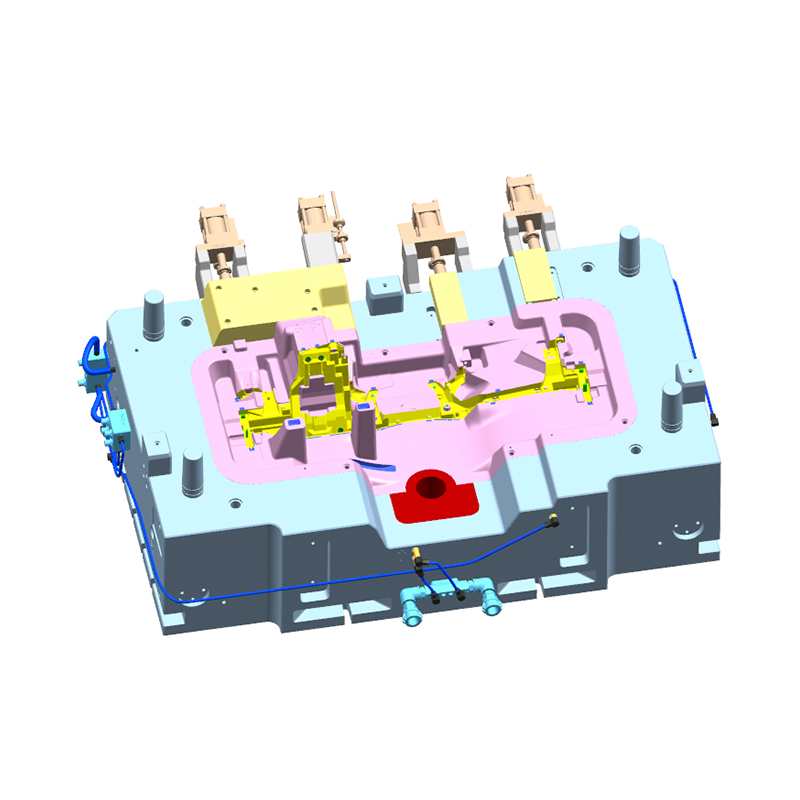



Contact Information
-
 Wangshan Road, Jiangbei District, Ningbo, Zhejiang, China
 -
 86-135-64796935

Get A Quote
What Makes New Energy Vehicle Die Casting Molds Different, and How Do They Drive EV Manufacturing Forward?
2026-03-12
Content
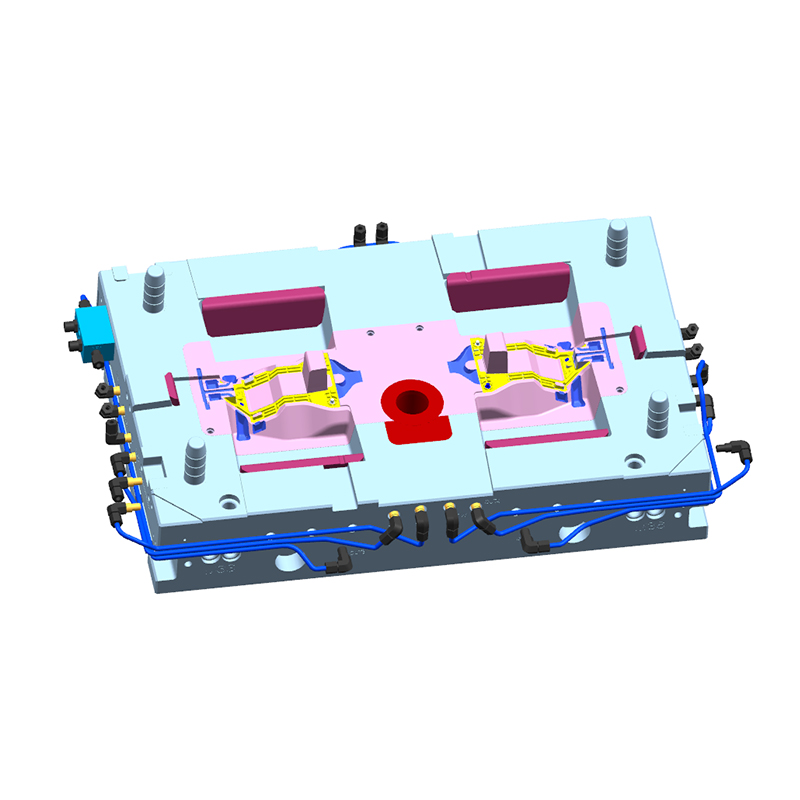
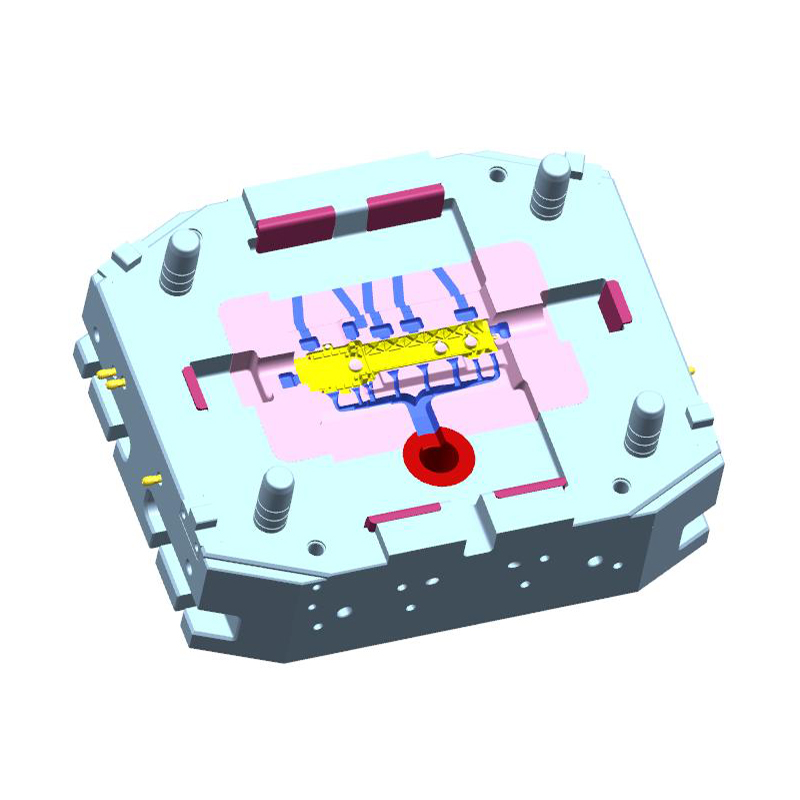
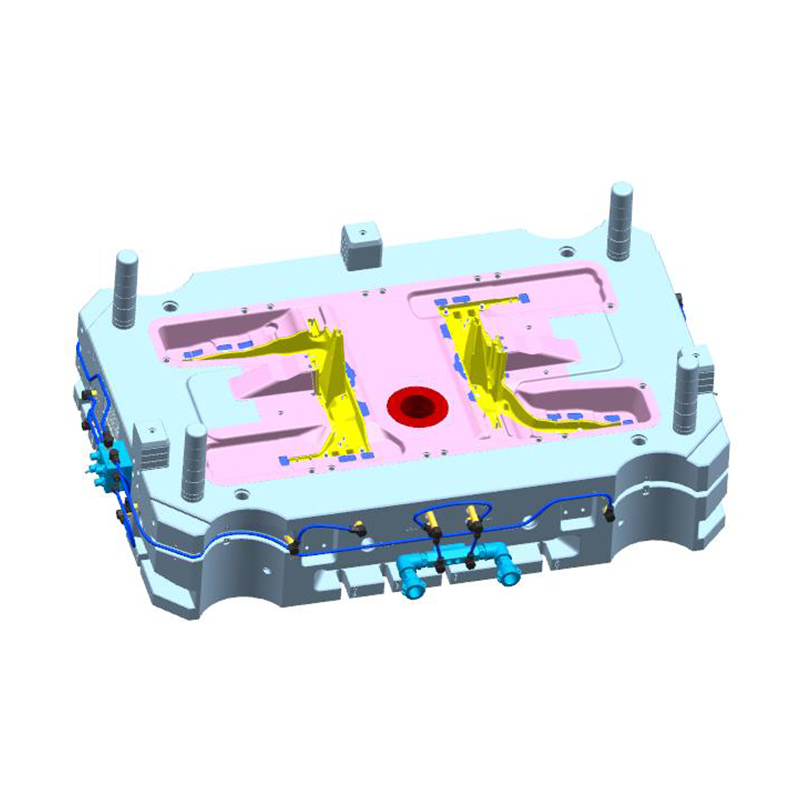
The rapid global expansion of new energy vehicles has placed die casting molds at the center of one of manufacturing's most demanding technological challenges. New energy vehicle die casting molds are purpose-engineered tooling systems designed to produce large, complex, lightweight aluminum and magnesium structural components that conventional automotive molds cannot reliably deliver at the required scale, precision, or cycle consistency. From battery enclosures and motor housings to integrated structural frames produced through gigacasting, these molds define both the quality ceiling and the production economics of modern EV manufacturing.
This guide examines what distinguishes NEV die casting molds from conventional automotive tooling, the specific components they produce, the materials and engineering principles that govern their design, the challenges that make them technically demanding, and the trends shaping their evolution as EV production volumes continue to climb worldwide.
Internal combustion engine vehicles and new energy vehicles share many structural manufacturing methods, but the specific demands of electric powertrains, battery systems, and lightweight platform architectures push die casting molds into significantly more demanding territory than traditional automotive tooling.
The core difference begins with part complexity and size. NEV structural components are typically larger, thinner-walled, and more geometrically complex than equivalent ICE components. A battery tray for a mid-sized electric sedan may span over one meter in length with wall thicknesses of 2.5 to 4 millimeters across a highly complex internal geometry incorporating cooling channels, mounting bosses, and integrated stiffening ribs. Producing this part consistently in a die casting mold requires engineering precision that exceeds most traditional automotive casting applications.
Weight reduction is another driver. Because battery mass already adds 300 to 600 kilograms to an NEV compared to an equivalent ICE vehicle, every kilogram saved in the vehicle structure directly extends driving range. Aluminum die casting allows structural components to be 30 to 50% lighter than equivalent steel stampings, making it the dominant manufacturing method for NEV structural parts. This weight pressure pushes mold designers toward thinner walls and more complex geometries that require extremely precise mold engineering to fill consistently without defects.
Many NEV structural components integrate thermal management functions directly into their cast structure. Battery trays often incorporate cast-in coolant channels that circulate liquid to regulate battery temperature during charging and operation. Motor housings integrate cooling jackets. These integrated thermal features require molds with extremely precise core systems that can maintain dimensional accuracy across millions of casting cycles without the core shifting, warping, or eroding in ways that would compromise the sealing integrity of the coolant passages.
The consequence of a defective coolant channel in a battery tray is far more serious than a cosmetic casting defect in a decorative automotive part. Coolant leakage into a battery pack creates a catastrophic safety risk, which means the tolerance requirements and quality standards for these integrated thermal components are significantly stricter than for most conventional automotive castings.
New energy vehicle die casting molds produce a wide range of structural, powertrain, and thermal management components. Understanding the specific parts being produced and their functional requirements provides the context for understanding why the mold engineering challenges are so significant.
The battery housing is arguably the most critical and demanding NEV die casting application. It must provide structural rigidity to protect cells from impact and deformation, incorporate precise coolant channel geometry for thermal management, maintain dimensional accuracy across all cell mounting and sealing surfaces, and achieve all of this in a part that may weigh 15 to 40 kilograms and measure over a meter in its longest dimension.
Battery tray molds are among the largest and most complex die casting tools in production. They operate on die casting machines with clamping forces of 3,500 to 6,000 tonnes and require extremely sophisticated runner and gate systems to ensure complete, uniform fill of complex internal geometries at the high injection velocities needed to fill thin walls before the aluminum solidifies.
Electric motor housings for NEVs are typically cylindrical or near-cylindrical aluminum castings that must provide precise bore geometry for bearing mounting, integrate a water jacket for motor cooling, and maintain tight tolerances on all mating surfaces where the motor assembles with gearbox and inverter components. The circularity and cylindricity tolerances on motor housing bores are critical to bearing life and motor performance, requiring mold designs that control thermal distortion during and after casting with exceptional precision.
Inverter housings protect and cool the power electronics that convert DC battery power to AC motor current. These components require excellent electromagnetic shielding properties, precise dimensional control for electronic component mounting, and integrated heat sink structures or coolant passages to manage the substantial heat generated by power electronics at high current levels. Die casting molds for inverter housings must produce very thin, dimensionally stable walls with complex internal features and smooth internal surfaces that do not trap heat.
The most transformative development in NEV die casting is gigacasting, the production of very large integrated structural components that replace assemblies previously made from dozens of individual stampings and castings welded together. Tesla pioneered this approach with its rear underbody casting and has extended it to front and rear integrated structures. These single-piece castings can replace assemblies of 70 to 100 individual parts, reducing assembly labor by up to 40% and structural weight by 10 to 20% compared to equivalent welded assemblies.
Gigacasting molds are the largest die casting tools ever built for automotive production. They operate on machines with clamping forces of 6,000 to 16,000 tonnes and must produce parts with projected areas exceeding 1.5 square meters. The engineering complexity of these tools in terms of gating, venting, cooling, and ejection is unprecedented in automotive tooling history.
The selection of mold materials is one of the most consequential decisions in NEV die casting tool design. Mold materials must withstand the extreme thermal and mechanical stresses of high-pressure aluminum die casting while maintaining dimensional stability and surface integrity across production runs that may reach hundreds of thousands of cycles.
Hot work tool steels are the standard material for die casting mold cavities and cores. The most widely used grades in NEV die casting applications include:
The extreme thermal cycling that occurs during aluminum die casting causes progressive surface degradation through heat checking, erosion, and soldering. Surface treatments applied to mold cavity and core surfaces significantly extend tool life and maintain surface quality:
The engineering of new energy vehicle die casting molds involves solving a set of interconnected challenges that must all be addressed simultaneously within the mold design. Failure in any one area leads to quality problems, shortened tool life, or production inefficiency.
A die casting mold for an NEV structural component experiences thermal cycling from approximately 200 to 250 degrees Celsius at the cavity surface during metal injection to 180 to 200 degrees Celsius during cooling, repeating with each casting cycle. Over hundreds of thousands of cycles, this thermal fatigue is the primary cause of heat checking and cavity surface degradation.
Conformal cooling channels, machined or additively manufactured to follow the contour of the cavity surface at a consistent standoff distance, are now standard in high-performance NEV die casting molds. Conformal cooling channels deliver significantly more efficient and uniform heat extraction than conventional straight-drilled cooling circuits. Studies have demonstrated that conformal cooling can reduce cycle times by 15 to 30% and reduce the temperature differential across the cavity surface by 40 to 60% compared to conventional cooling, which directly reduces thermal fatigue damage and extends mold life.
Additive manufacturing, specifically selective laser melting of tool steel powder, has enabled the production of complex conformal cooling inserts with internal channel geometries that cannot be produced by conventional machining. This technology has become an important enabler of high-performance cooling in NEV die casting molds.
The gating system controls how molten aluminum enters the mold cavity, and its design has a profound influence on part quality, porosity levels, and the ability to fill thin, complex sections without cold shuts or misruns. NEV structural components with wall thicknesses of 2.5 to 3.5 millimeters and large projected areas present extreme gating design challenges because the aluminum must fill the entire cavity before it begins to solidify.
Gate velocity, gate area, and gate location must be optimized simultaneously. Too high a gate velocity creates turbulence that entrains air and oxide films, causing porosity. Too low a velocity leads to premature solidification and cold shuts. Typical gate velocities for aluminum die casting are 30 to 50 meters per second, and achieving this across a large, complex part geometry requires careful computational fluid dynamics simulation during mold design to verify that the flow front behaves as intended.
Air and gas trapped in the mold cavity during metal injection is the primary source of porosity in aluminum die castings. For NEV structural components where porosity compromises both mechanical integrity and pressure tightness of integrated coolant channels, controlling trapped gas is critical.
Vacuum die casting systems that evacuate the mold cavity to below 50 millibar before and during injection are standard practice for high-integrity NEV structural components. These systems require precisely machined vacuum channels, fast-acting vacuum valves, and mold sealing systems that maintain vacuum integrity at the parting line and around all slide and core interfaces throughout the injection cycle. The mold design must accommodate vacuum circuit routing without compromising structural integrity or cooling circuit coverage.
Ejecting a large, thin-walled NEV structural casting from the mold without distortion or surface damage requires a carefully engineered ejection system with ejector pins distributed to apply force evenly across the part area. Uneven ejection force on a large, relatively flexible casting causes local distortion that may exceed dimensional tolerances or create stress concentrations that reduce fatigue life in service.
For gigacast parts, ejection system engineering is particularly demanding. A rear underbody casting for an electric vehicle may weigh 50 to 70 kilograms and span over 1.4 meters. Ejecting this part uniformly, transferring it to a handling system, and doing so repeatably every 80 to 120 seconds across hundreds of thousands of production cycles requires ejection system design of exceptional precision and reliability.
Different NEV components place different demands on die casting molds. The following comparison illustrates how key mold specification parameters vary across the main NEV casting applications:
| Component | Machine Tonnage | Key Mold Challenge | Vacuum Required | Typical Tool Life (shots) |
|---|---|---|---|---|
| Battery Tray | 3,500 to 6,000T | Coolant channel integrity, large area fill | Essential | 80,000 to 120,000 |
| Motor Housing | 1,000 to 2,500T | Bore concentricity, water jacket sealing | Strongly recommended | 150,000 to 250,000 |
| Inverter Housing | 800 to 1,600T | Thin walls, EMC shielding surfaces | Recommended | 200,000 to 300,000 |
| Gigacast Rear Frame | 6,000 to 16,000T | Extreme size, uniform fill, ejection | Essential | 50,000 to 100,000 |
| Gearbox Housing | 1,200 to 2,800T | Bearing bore accuracy, oil channel sealing | Recommended | 150,000 to 200,000 |
Computer simulation has become indispensable in NEV die casting mold development. The complexity of NEV structural components and the cost of building and modifying large die casting tools makes physical trial-and-error development prohibitively expensive. Simulation allows engineers to identify and resolve problems in the virtual domain before any metal or steel is cut.
Computational fluid dynamics simulation of mold filling predicts how molten aluminum will flow through the runner system and gate into the mold cavity. It identifies potential cold shut locations where two flow fronts meet at low temperature, predicts air entrapment and porosity risk zones, and allows gate position and runner geometry to be optimized before tool construction. Modern filling simulation software such as Magmasoft, ProCAST, and Altair Inspire Cast can model the complete filling event in minutes and predict porosity distribution with good accuracy when boundary conditions are correctly specified.
Finite element analysis of the mold structure predicts thermal gradients, thermal stress distribution, and mechanical deflection under clamping and injection forces. For large NEV die casting tools, mold deflection under the extreme clamping forces of high-tonnage machines can be significant enough to affect parting line sealing and dimensional accuracy of the cast part if not accounted for in the mold design.
Thermal fatigue simulation based on cyclic thermal loading models predicts which mold zones are most susceptible to heat checking, allowing engineers to specify enhanced cooling, improved steel grade, or protective surface coatings in the highest-risk areas before production begins. Simulation-driven mold design has been shown to reduce the number of physical tryout iterations required before production approval by 40 to 60% in high-complexity NEV casting applications, representing significant time and cost savings.
As the casting solidifies and cools from casting temperature to room temperature, differential thermal contraction causes the part to distort from its as-cast geometry. For large NEV structural components with tight dimensional tolerances on bearing bores, sealing surfaces, and assembly interfaces, distortion prediction is essential. Simulation of the solidification and cooling process allows mold cavity dimensions to be compensated in advance so that the final cooled part meets its nominal dimensions despite the distortion that occurs during cooling.
The safety and performance criticality of NEV structural components demands rigorous quality control throughout the casting process and on the finished parts. Die casting mold design directly influences how easily quality can be monitored and controlled in production.
Modern NEV die casting cells incorporate extensive in-process monitoring systems that track process parameters on every shot and flag deviations that may indicate quality problems. Key monitored parameters include:
High-value NEV structural castings undergo non-destructive testing to verify internal quality without destroying the part. The primary NDT methods applied are:
The NEV industry is developing so rapidly that die casting mold technology is being continuously pushed toward new capabilities. Several trends are actively reshaping what molds for NEV components look like and how they are developed.
Following Tesla's commercial validation of gigacasting for structural components, multiple Chinese, European, and Korean automakers are now developing or deploying gigacasting programs. BYD, Nio, Li Auto, Volvo, and Toyota have all announced or implemented large-scale structural casting programs. The global market for die casting machines above 6,000 tonnes clamping force is projected to grow at over 25% annually through 2028 as these programs scale to production volumes.
This expansion is driving demand for mold makers capable of engineering and producing the largest and most complex die casting tools ever built for automotive production, and is concentrating the most advanced mold technology development in the NEV sector.
Additive manufacturing is increasingly integrated into NEV die casting mold production for the production of conformal cooling inserts and complex core components. Selective laser melting of H13 tool steel powder allows cooling channel geometries impossible to achieve by conventional drilling, and hybrid manufacturing approaches that combine additive and subtractive processing are becoming standard practice for high-performance mold inserts in NEV applications.
Digital twin models of die casting molds, combining design data with real-time production monitoring information, are being deployed by leading automotive manufacturers and die casters to predict maintenance requirements, optimize process parameters, and track mold degradation over the production lifecycle. A mold digital twin that integrates shot counter data, thermal monitoring, and dimensional inspection results can predict when cavity refurbishment will be required before quality problems occur in production, reducing unplanned downtime and scrap generation.
Alloy development is proceeding in parallel with mold technology to enable heat-treatment-free casting alloys that achieve the mechanical properties previously requiring post-casting T5 or T6 heat treatment. These alloys, such as Tesla's Silafont-36 based material used in its gigacast parts, simplify the manufacturing process and reduce energy consumption but place new demands on mold temperature control to achieve the required microstructure during solidification in the mold. Heat-treatment-free alloys require mold thermal management precision that is significantly more demanding than conventional alloy casting, driving further development of conformal cooling and real-time mold temperature control systems.
As NEV production volumes continue their global growth trajectory and vehicle architectures evolve toward greater structural integration and lighter weight targets, the engineering capability embedded in new energy vehicle die casting molds will remain a fundamental differentiator between manufacturers who can achieve cost and quality targets and those who cannot. The tooling is not visible in the finished vehicle, but it is the foundation on which every structural NEV component is built.
Wangshan Road, Jiangbei District, Ningbo, Zhejiang, China
86-135-64796935
Copyright © Ningbo NKT Tooling Co., Ltd. All Rights Reserved.
 Login
Custom Automotive Aluminum/Zinc Die Casting Molds Manufacturers
Login
Custom Automotive Aluminum/Zinc Die Casting Molds Manufacturers
