
 English
 中文简体
中文简体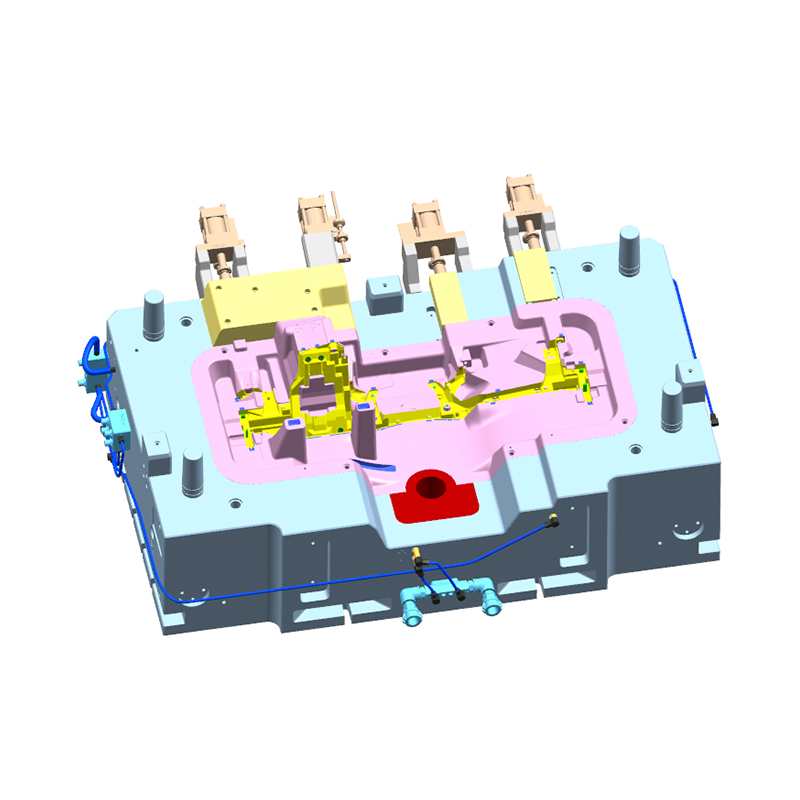



Contact Information
-
 Wangshan Road, Jiangbei District, Ningbo, Zhejiang, China
 -
 86-135-64796935

Get A Quote
What Is Cast Aluminum? Properties, Process, Alloys, and Industrial Uses
2026-09-03
Content
A program manager receives a quotation for a battery compartment plate. The drawing specifies ADC12 aluminum, a minimum elongation of 2%, and a 100% pressure-tight requirement for the internal cooling channel. The supplier explains that the part will run in a high-pressure die casting cell using one-mold-two-cavity tooling. In that short exchange, almost every important fact about cast aluminum is already on the table: the alloy, the process, the geometry, and the quality requirement.
Cast aluminum, in the simplest definition, is aluminum that has been melted and solidified in a mold to create a finished or near-finished part. It is a category rather than a single product. The category includes a wide range of alloys, several commercially important casting processes, and mechanical properties that vary from soft and ductile to hard and wear-resistant. Engineers who specify cast aluminum parts, buyers who source them, and designers who want to understand their options all need the same foundation. That foundation has four parts: what cast aluminum is, how it is made, what properties it offers, and when it is the right material choice. This article covers all four with an emphasis on automotive and industrial applications.
Cast aluminum is a metal component produced by pouring or injecting molten aluminum alloy into a mold cavity, where it cools and solidifies into the shape of that cavity. The mold can be a one-off sand form destroyed after a single use, or a precision steel die that produces millions of parts over years of service. Aluminum is well suited to casting because it melts at about 660 °C, a relatively low temperature compared with steel's melting range around 1,370–1,530 °C, and because molten aluminum flows easily when alloyed with silicon.
The term "cast aluminum" refers both to the finished part and to the class of materials used to produce it. Pure aluminum is rarely cast into structural components. Industrial castings use alloys containing a few percent of elements such as silicon, copper, magnesium, manganese, and zinc. These additions change fluidity, strength, hardness, corrosion resistance, and pressure tightness. The same logic explains why one component is an A356 sand casting and another is a 380 die casting: the alloy and the process are selected together, not independently.
Aluminum products are divided into two broad families. Wrought aluminum is shaped by mechanical deformation: rolling into sheet, extruding into profiles, forging, or drawing into wire. Cast aluminum is shaped by solidification inside a mold. The distinction appears even in alloy numbering. Wrought alloys use a four-digit system in which the first digit identifies the main alloying element, as in 6061 or 7075. Casting alloys use a similar system but are identified with a decimal, such as 356.0, 380.0, or 413.0, or with designations like A356 and A380.
The practical difference is microstructure. Cast aluminum cools from a liquid, which gives the metal a dendritic grain structure and can create porosity, shrinkage, or segregation. Wrought aluminum is worked and heat-treated, usually reaching higher strength and ductility. However, casting wins decisively in geometry freedom and unit cost at high volume. A water-cooled motor housing, a ribbed battery tray, or a transmission case would be impossible or uneconomical to make by forging or machining, but they are routine castings.
Cast aluminum appears across transportation, aerospace, telecommunications, power tools, household appliances, and industrial machinery. The highest concentration is in vehicles. Traditional automotive castings include engine blocks, cylinder heads, oil pans, transmission housings, intake manifolds, steering gear housings, brake components, and mounting brackets. New energy vehicles add motor housings, battery compartment plates, inverter and controller housings, cooling water jackets, and e-drive transmission cases. Outside vehicles, cast aluminum forms the housings of pumps, compressors, valves, switchgear, LED street lights, medical devices, and electronic enclosures. The common thread is a need for complex, lightweight, corrosion-resistant parts produced in quantity.
Every cast aluminum part starts with the same sequence: an alloy is melted, conditioned, and moved into a mold, where it solidifies and is removed for finishing. The processes differ mainly in how molten metal enters the mold and how pressure is applied during solidification. That difference determines part size, achievable wall thickness, surface finish, mechanical quality, production rate, and tooling cost.
Sand casting is the oldest and most flexible process. A pattern is used to form a cavity in bonded sand, and molten aluminum is poured in under gravity. Because sand molds can be made in nearly any size, sand casting handles everything from a few hundred grams to several tons, and it is the default route for prototypes and low volumes. The trade-offs are a coarse surface finish, larger dimensional tolerances, slower cycles, and a new mold for every casting. Sand castings often need machined surfaces and are usually supplied with generous machining allowances.
Permanent mold casting uses a reusable steel or cast-iron mold. A two-part mold is clamped, and molten aluminum is poured through a sprue under gravity. The metal cools faster than in sand, giving a denser structure and better mechanical properties. Surface finish and tolerance are good, and tooling life can reach tens of thousands of cycles. Permanent mold casting suits medium production volumes and parts that need better strength than sand casting but do not justify the tooling cost of high-pressure die casting.
In low-pressure casting, the mold sits above a furnace of molten aluminum, and air pressure of roughly 0.2 to 0.7 bar forces metal up a riser tube into the mold. The controlled fill produces clean, dense castings with low turbulence. Aluminum wheels, cylinder heads, and structural suspension parts are frequently low-pressure cast when volumes do not justify high-pressure die casting. The main limitation is cycle time, which is longer than die casting because filling is deliberate and pressure must be maintained through solidification.
High-pressure die casting is the process most people mean when they say "die casting." Molten aluminum is forced into a hardened steel die at high speed and under high pressure, using a machine with an injection system that can exert clamping forces of several hundred to several thousand tons. Injection pressures are usually in the range of 10 to 100 MPa, and cavity fill takes milliseconds to tens of milliseconds. This is what makes ultra-thin walls, intricate rib patterns, and net-shape geometry possible. Production rates are the highest of any aluminum casting process: a part can leave the machine in under a minute, and a multi-cavity die can produce several castings per shot.
HPDC is the dominant process for automotive aluminum components. The catch is porosity. Because the cavity fills so fast, air can be trapped in the metal. Standard die castings are therefore not recommended for parts that must be welded or heat-treated without special controls. High-vacuum die casting, in which the die is evacuated before injection, reduces trapped gas and permits thin-walled structural castings with elongations high enough for body structure applications. Tooling for HPDC is expensive, but die life is long. A well-maintained H13 tool can run from 100,000 to well over one million shots, depending on wall thickness, casting alloy, and thermal management.
Squeeze casting, also called extrusion casting or liquid forging in some markets, fills the die slowly under low turbulence and then applies high pressure during solidification. This approach almost eliminates the porosity problem and produces parts with mechanical properties close to forged aluminum. Battery compartment plates and other safety-critical structural parts are often squeeze cast when designers need both complex geometry and high integrity. The process costs more per shot than HPDC, so it is reserved for parts where quality demands justify the premium.
Every casting, no matter how net-shape, usually passes through secondary operations before it becomes a finished part. The sprue, runners, and overflow biscuits are trimmed off, either in a trim press with a die that follows the part outline, or manually in lower volumes. Critical areas such as sealing faces, bearing bores, and threaded holes are machined on CNC lines, often with robots loading and unloading the same casting. Heat treatment, if specified, comes before machining to control distortion. Finally, surface treatment protects the part and improves appearance: powder coating, anodizing, chromate conversion coating, or paint. Secondary operations can easily represent 30–50% of the final part cost, which is why casting designs that add machining stock "just in case" are expensive: the extra material consumes machining time, tool wear, and coolant.
The table below summarizes the key characteristics of the main aluminum casting processes. The figures are typical ranges rather than guarantees; actual capabilities vary with part geometry, alloy, and equipment.
| Process | Mold type | Injection / fill pressure | Typical wall thickness | Surface finish | Tooling life | Typical production volume |
|---|---|---|---|---|---|---|
| Sand casting | Bonded sand, destroyed each shot | Atmospheric (gravity) | 3–25 mm | Rough | Single use | 1–1,000 parts |
| Permanent mold | Reusable steel or iron | Gravity | 3–12 mm | Good | 10,000–100,000 | 1,000–100,000 parts |
| Low pressure | Reusable steel | 0.2–0.7 bar | 2–8 mm | Good | 10,000–100,000 | 5,000–200,000 parts |
| High-pressure die casting | Reusable hardened steel die | 10–100 MPa | 1–6 mm | Excellent | 100,000–1,000,000+ | 50,000–5,000,000+ parts |
| Squeeze / extrusion casting | Reusable steel die | 50–100 MPa during solidification | 2–10 mm | Very good | 50,000–200,000 | 10,000–500,000 parts |
This comparison explains a common pattern in industry. A transmission case produced at 200,000 units per year is die cast. A suspension component produced at 10,000 units per year may be permanent-mold or low-pressure cast. A prototype housing made in week one is sand cast. Process selection is an economics decision, not just a technical one.
Understanding what cast aluminum is requires knowing why designers specify it. The material brings a combination of properties that few other metals match.
Aluminum weighs about 2.7 g/cm³, roughly one-third as much as steel and cast iron. Cast aluminum does not reach the strength of high-strength steels, but its strength-to-weight ratio is favorable, especially with structural alloys and heat treatment. Every kilogram saved in a vehicle improves fuel economy or electric range, which is the main reason aluminum castings have displaced cast iron in engines, transmissions, and chassis components.
Aluminum forms a thin, dense oxide layer that protects the surface from further oxidation. Most cast aluminum alloys resist atmospheric corrosion, road salt, and water well, provided the alloy is selected for the environment. The oxide layer also makes cast aluminum a good base for anodizing and powder coating. One caution: alloys with high copper content, such as A380, have lower corrosion resistance than alloys with low copper, such as A356, in aggressive salt environments.
Cast aluminum conducts heat much better than steel or cast iron. Thermal conductivity values for common die casting alloys fall in the range of 90–170 W/(m·K), compared with about 45–50 W/(m·K) for steel. This is why motor housings, battery cooling plates, LED heat sinks, and electronic enclosures are cast in aluminum: the metal carries heat away from coils, cells, and circuits. Aluminum also conducts electricity well, which supports EMI shielding inside electronic housings.
High-pressure die casting produces near-net-shape parts with tolerances in the range of ±0.03 to ±0.15 mm for small features, depending on the dimension and the alloy. Surface finishes in the as-cast condition can be as fine as 0.8–3.2 µm Ra with a well-maintained die. This reduces machining, shortens assembly time, and allows features like bosses, thread forms, locating pins, and insertion slots to be cast directly into the part.
Casting is the most geometry-free of all metalworking methods. Ribs can be added where stiffness is needed, wall thickness can be varied, multiple functions can be integrated into one body, and openings can be cored instead of drilled. Die casting takes this further with thin walls down to about 1 mm for small parts and complex internal channels. For the mold designer, this means gate placement, cooling lines, ejection, and draft have to be resolved early because the mold, once made, cannot be changed cheaply.
Cast aluminum has real constraints. Its elastic modulus is about 69 GPa, one-third the modulus of steel, so a cast aluminum part needs more section depth or ribs to reach the same stiffness. Elongation is modest: typical die casting alloys provide 1.5–4% elongation, though structural alloys produced with high-vacuum die casting or squeeze casting can reach 7–12%. Fatigue strength is lower than wrought products, and sharp internal corners reduce it further. Service temperatures are limited compared with ferrous materials: creep and overaging become concerns above roughly 150–200 °C. Finally, porosity can appear in thicker sections unless the process is controlled with vacuum, squeeze casting, or careful gating design.
Cast aluminum has a strong sustainability story. Aluminum can be recycled indefinitely without losing its basic properties, and recycling the metal uses about 5% of the energy required to produce primary aluminum. Foundries routinely return sprues, runners, and rejected castings directly to the furnace, so scrap is reused in-house rather than landfilled. For the vehicle industry, the lightweighting benefit compounds over the life of the product: the weight saved by choosing cast aluminum cuts fuel or battery energy consumption for years.
The following table gives representative mechanical values for two common cast aluminum alloys. A380 is the workhorse die casting alloy; A356-T6 is the standard structural alloy, usually sand cast or permanent-mold cast, and used extensively for high-integrity automotive parts.
| Property | A380 (die cast) | A356 (T6 heat-treated, permanent mold) |
|---|---|---|
| Density (g/cm³) | 2.71 | 2.67 |
| Ultimate tensile strength (MPa) | 320 | 260–270 |
| Yield strength, 0.2% offset (MPa) | 160 | 190–200 |
| Elongation (%) | 2.5–3.5 | 8–10 |
| Brinell hardness (HB) | 80 | 80 |
| Thermal conductivity (W/m·K) | 95–100 | 150–170 |
| Nominal composition | Al-Si8Cu3.5 | Al-Si7Mg0.35 |
The A356-T6 alloy is more ductile and conducts heat better, but it is more expensive to cast because it requires heat treatment and a slower, more controlled process. A380 offers lower cost per part and excellent castability but sacrifices elongation and corrosion resistance. This trade-off pattern — cost, strength, ductility, conductivity — repeats across the whole cast aluminum family.
Cast aluminum alloys are grouped by their main alloying element. Most commercial castings use one of four families: aluminum-silicon, aluminum-silicon-copper, aluminum-magnesium, or aluminum-copper. The choice affects flow, pressure tightness, strength, ductility, corrosion resistance, machinability, and cost.
Silicon is the main workhorse element in casting alloys. It raises fluidity, reduces shrinkage, and lowers the melting range. A356 contains roughly 7% silicon and 0.35% magnesium, which allows hardening by a T6 heat treatment. It is the most common alloy for structural castings that need elongation and weldability. High-silicon alloys such as 413, around 12% silicon, produce excellent pressure-tight castings for hydraulic and pneumatic components.
Copper increases strength and hardness and improves machinability, at some cost to ductility and corrosion resistance. A380, with about 8% silicon and 3.5% copper, is the most widely used die casting alloy. ADC12, a Japanese specification with typical composition Al-Si11Cu2, plays the same role in Asia. These alloys fill thin walls readily, keep cycle times short, and deliver good surface finish. They are not generally heat-treated because copper promotes dimensional instability, and their elongation is usually below 4%.
Magnesium gives the best combination of corrosion resistance and strength among non-heat-treated casting alloys. These alloys are used for marine hardware and food-contact components. The trade-off is lower fluidity and a higher tendency to oxidize and react in the molten state, which makes casting more demanding.
Copper-rich alloys provide the highest strength and hardness of the casting alloys, often exceeding 400 MPa tensile in premium conditions, and they retain strength at elevated temperatures better than silicon-based alloys. However, they are difficult to cast, prone to hot tearing, and less corrosion resistant. They appear in racing, aerospace, and small premium parts rather than high-volume automotive castings.
Choosing begins with the application requirement, not the alloy catalog. Structural and safety parts need defined minimum elongation, often near A356-T6 level. Pressure-tight housings need low porosity and good weldability, which points toward vacuum die casting with alloys like A356 or high-silicon versions. Cosmetic and high-volume parts with no welded joints can use A380 or ADC12. The choice of alloy interacts with the tooling: mold steel, coatings, and cooling layout are selected to match the casting temperature and erosion behavior of a specific alloy. For a closer look at that interaction, see how to choose the right material for aluminum alloy die casting molds.
| Alloy | Main elements | Typical casting process | Key characteristics | Typical applications |
|---|---|---|---|---|
| A356 | Si 7%, Mg 0.35% | Sand, permanent mold, low pressure | Heat treatable, high ductility, weldable | Structural brackets, wheels, suspension parts |
| A380 | Si 8%, Cu 3.5% | Die casting | Excellent castability, good strength | Engine housings, transmission cases, covers |
| ADC12 | Si 11%, Cu 2% | Die casting | Good fluidity, thin walls | Motor housings, electronic enclosures |
| 413 | Si 12% | Die casting | High pressure tightness | Hydraulic bodies, compressor housings |
| 514 | Mg 4% | Permanent mold | Excellent corrosion resistance | Marine and food-contact parts |
| 201 | Cu 4.5% | Sand, investment | High strength | Aerospace and racing components |
The table simplifies real-world alloy specifications: manufacturers will ask for a specific national standard such as ASTM B85, EN 1706, or JIS H5302, and the foundry will certify the chemistry on the heat-lot certificate. If you are sourcing castings, put the standard in the drawing, not in the memory of the purchasing agent.
Cast aluminum competes with several materials. The right choice depends on the load case, environment, production volume, and the cost allowed for the part. A few comparisons are worth making explicit because they settle most engineering debates.
Wrought aluminum reaches higher tensile strength and elongation because deformation refines the grain structure and eliminates casting porosity. A 6061-T6 extrusion, for example, typically offers about 310 MPa tensile with 12% elongation, while an A380 die casting offers 320 MPa but only about 3% elongation. The catch is geometry. Extrusions are prismatic, sheet is flat, and forgings have draft and parting lines. When a part needs internal cooling channels, angled bosses, or integrated mounts, casting is the only economical process. In practice, vehicles use both: extruded profiles for crash rails and casting nodes for corners and mounts, with the two joined by welding or fasteners.
Cast iron is heavier, about 7.1–7.2 g/cm³ versus 2.7, and roughly three times stiffer. It is also cheaper per kilogram, wears well, and dampens vibration better than aluminum. But aluminum wins on weight, corrosion resistance, and thermal conductivity. This is why engine blocks migrated from iron to aluminum in most passenger cars: the weight saving improves fuel economy and front-axle balance. Gray iron still appears where strength and stiffness at low cost matter more than weight, such as heavy-duty brake discs and large industrial machine frames.
Steel has about three times the modulus of aluminum and can be hardened to much higher strength. For a given load, a steel part can be smaller and thinner. But steel corrodes unless protected, weighs more, and conducts heat poorly compared with aluminum. In automotive body structures, steel stampings remain dominant because they are inexpensive at very high volume, but aluminum castings are used for the complex joints and powertrain housings where a steel design would require dozens of welded pieces.
Magnesium is 35% lighter than aluminum but is more expensive, more difficult to cast safely, and more corrosion sensitive. It appears in steering wheel frames, instrument panel crossbeams, and small housings where mass limits are aggressive. Zinc alloys, by contrast, are heavier than aluminum but flow beautifully, cast at lower temperature, and achieve extremely tight tolerances. Zinc die casting is typically used for small components like locks, levers, and decorative hardware. Aluminum sits between them: lighter than zinc, more economical than magnesium, and the best overall balance for medium and large automotive housings.
| Material | Density (g/cm³) | Tensile strength (MPa) | Relative corrosion resistance | Typical part cost | Common casting use |
|---|---|---|---|---|---|
| Cast aluminum | 2.7 | 160–400 | Good to excellent | Low to medium | Housings, brackets, structural nodes |
| Cast magnesium | 1.8 | 160–280 | Fair to good | Medium to high | Steering frames, lightweight enclosures |
| Zinc alloy | 6.6–7.2 | 220–430 | Good | Low per part at small sizes | Small precision hardware, locks, levers |
| Cast iron | 7.1–7.2 | 150–400 | Poor (needs coating) | Low | Brake discs, engine blocks, machine bases |
| Cast steel | 7.8 | 400–700 | Poor (needs coating) | Medium | Heavy equipment, rail components |
The practical takeaway: cast aluminum is the material of choice when a component must combine complex shape, moderate structural duty, light weight, good corrosion performance, and a viable unit cost at production volume. When the shape is simple and the demand is maximum stiffness per dollar, iron or steel usually wins. When every gram matters and the budget allows, magnesium takes over small parts.
The clearest way to understand what cast aluminum is worth in practice is to look at the parts made with it today. Automotive is the largest market, and it splits into two distinct directions: conventional vehicle systems and new energy vehicle systems.
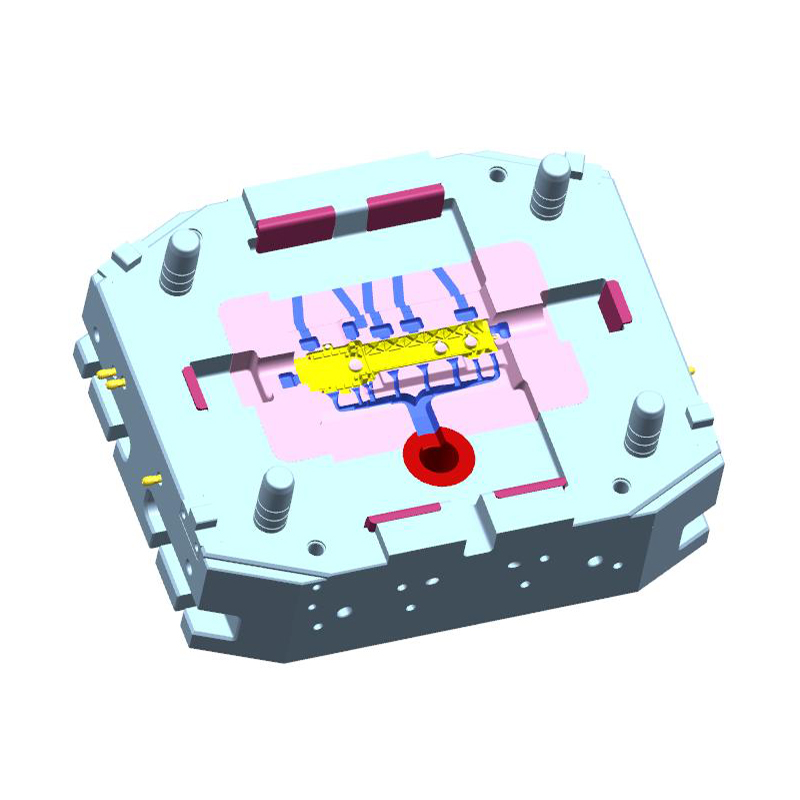
Cast aluminum has been a mainstream automotive material for decades. In a typical combustion engine vehicle, aluminum castings appear in the cylinder block, cylinder head, oil pan, intake manifold, transmission case, clutch housing, steering gear housing, water pump housing, and dozens of brackets and supports. Structural parts such as strut mounts, steering knuckles, subframe nodes, and seat frames are increasingly cast in high-ductility aluminum alloys. In the product catalog of a specialized die casting supplier, conventional-vehicle castings include the aluminum alloy steering gear, pump cover, support arm, wheel bracket, and airbag seat frame.
These parts share a pattern. They carry moderate structural loads, face corrosive environments, and are produced in volumes that justify expensive tooling. A steering gear housing, for example, must be pressure tight, dimensionally stable after machining, and rigid enough to hold the rack-and-pinion assembly. Aluminum delivers that at roughly a third of the weight of iron. The wheel bracket that connects a suspension arm to the body sees cyclic bending loads, so the casting design must place gates and overflow channels carefully to keep porosity out of the high-stress zones.
Electric and hybrid vehicles expanded the cast aluminum portfolio in a new direction. The three e-drive groups — motor, battery, and electric drive unit — each rely on aluminum castings.
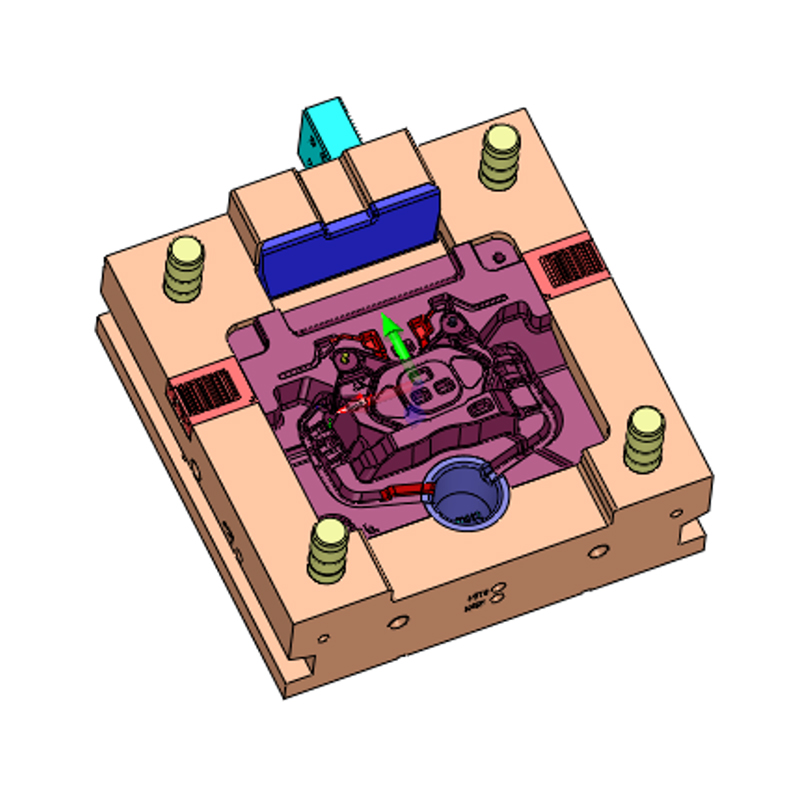
Drive motors produce substantial heat inside a compact envelope, and the housing is the primary heat path to the coolant. Motor housings are therefore die cast in aluminum with cast-in cooling channels or machined water jackets. A typical die-cast motor housing for a passenger EV uses an ADC12 or A356 alloy, wall thickness of 2.5 to 4 mm, and a tight bore tolerance for the stator fit. 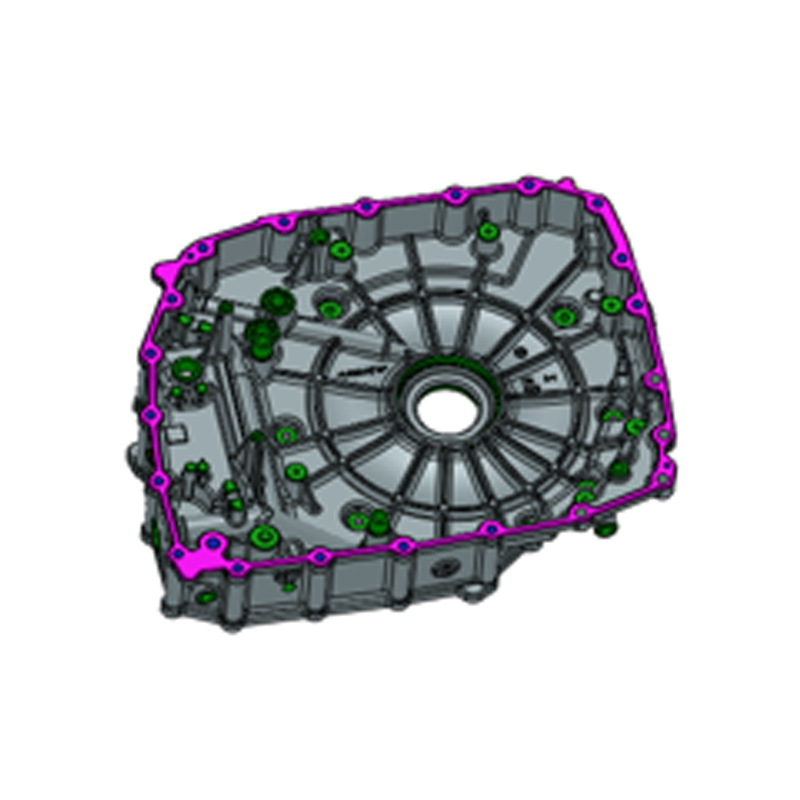 2200T Single-Cavity Aluminum Alloy Die-Cast Motor HousingThis large motor housing is produced on a 2,200-ton high-pressure die casting cell with AISi9Cu3(Fe) alloy, enabling near-net-shape casting of oversized housings for EV drive systems. Its single-cavity design enhances precision and structural integrity, making it relevant for evaluating integrated cooling and mounting features.View Product → The 2,200-ton class die casting cell used for large motor housings shows how far high-pressure die casting has scaled: housings well over 500 mm long are cast near-net-shape in one shot, with integrated ribs, mounting feet, and cable exits.
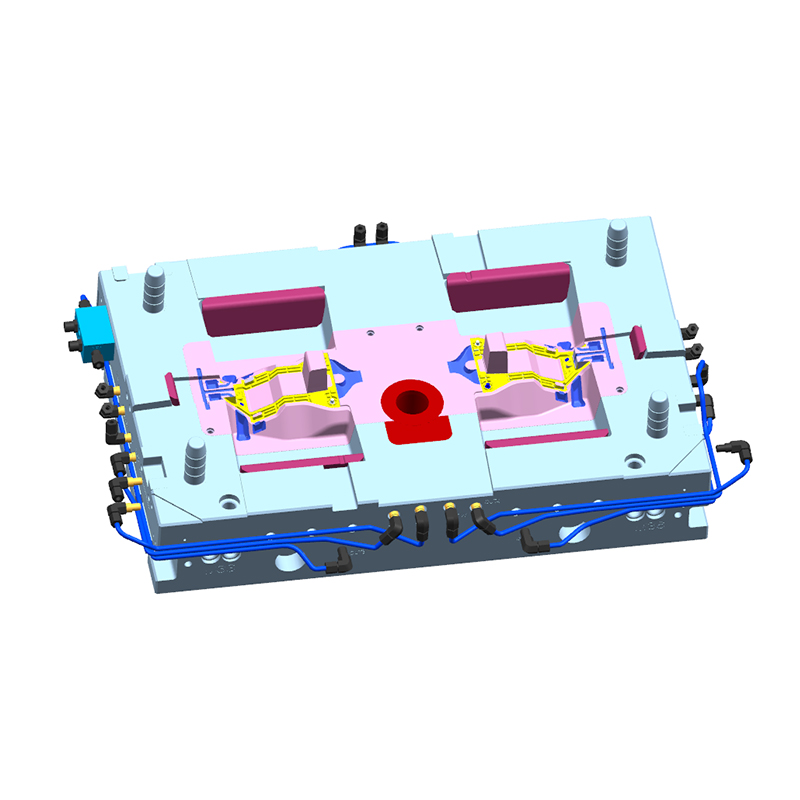
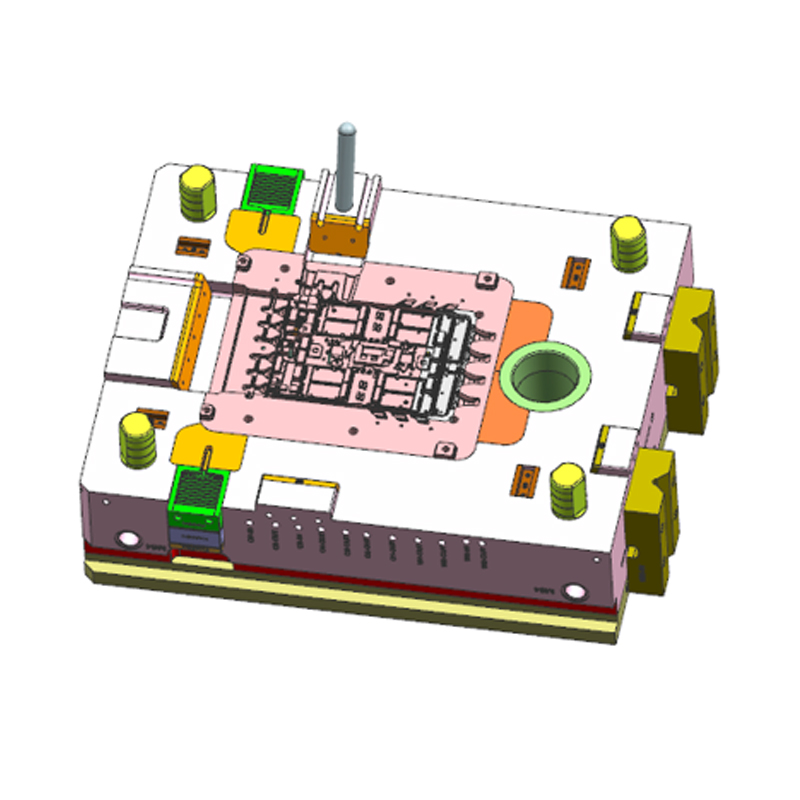
Battery trays and compartment plates are among the most demanding aluminum castings in a vehicle. The plate must be stiff enough to support modules, leak-tight if it forms the boundary of a cooling channel, and thin enough to save weight. Because battery pack mass is distributed across a large area, manufacturers often use one-mold-multi-cavity tooling to keep cost per part low. 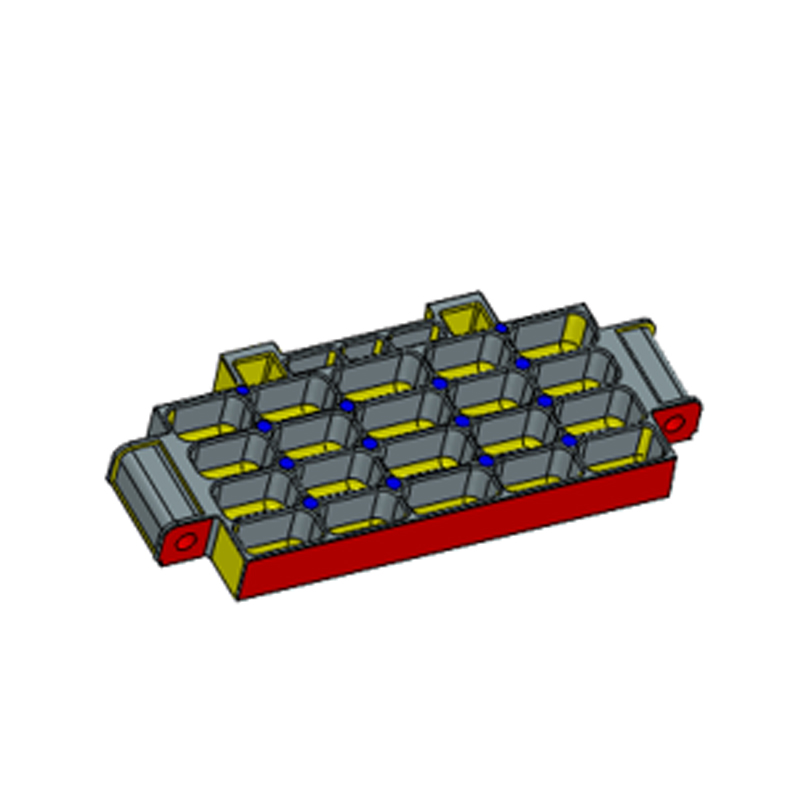 A356-T6 Battery Compartment Plate with Two-Cavity Extrusion CastingThis battery compartment plate uses A356-T6 aluminum and a two-cavity extrusion casting process on a 400-ton mold, offering higher production efficiency and consistent quality. Its design addresses stiffness, leak-tightness, and flatness requirements for EV battery pack support and sealing, as referenced in the preceding context.View Product → The one-mold-two-holes battery compartment plate is a direct example: two plates per shot, each held to flatness specifications that allow reliable sealing and module stacking.
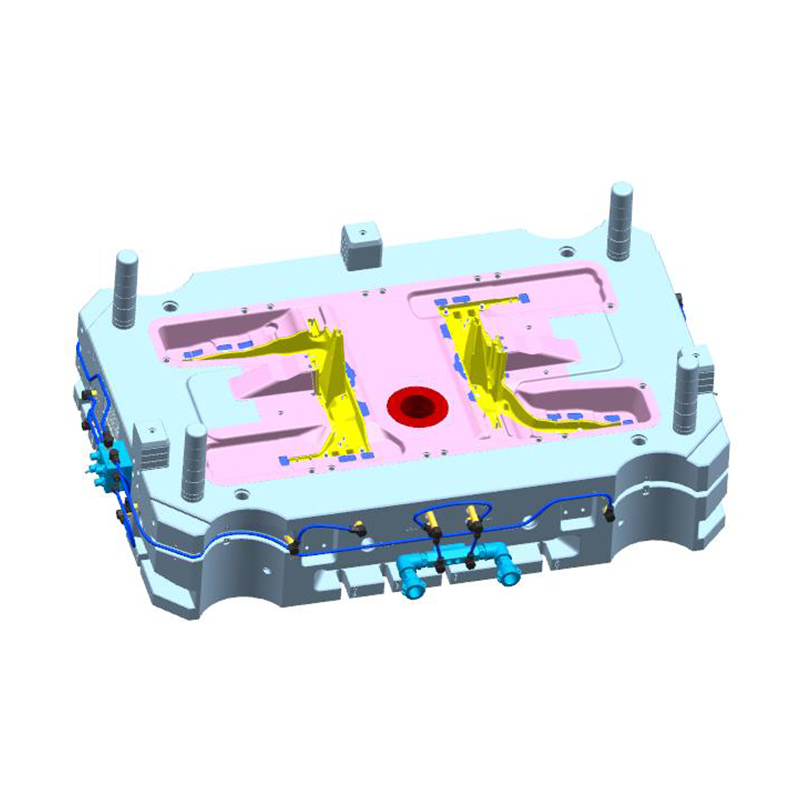
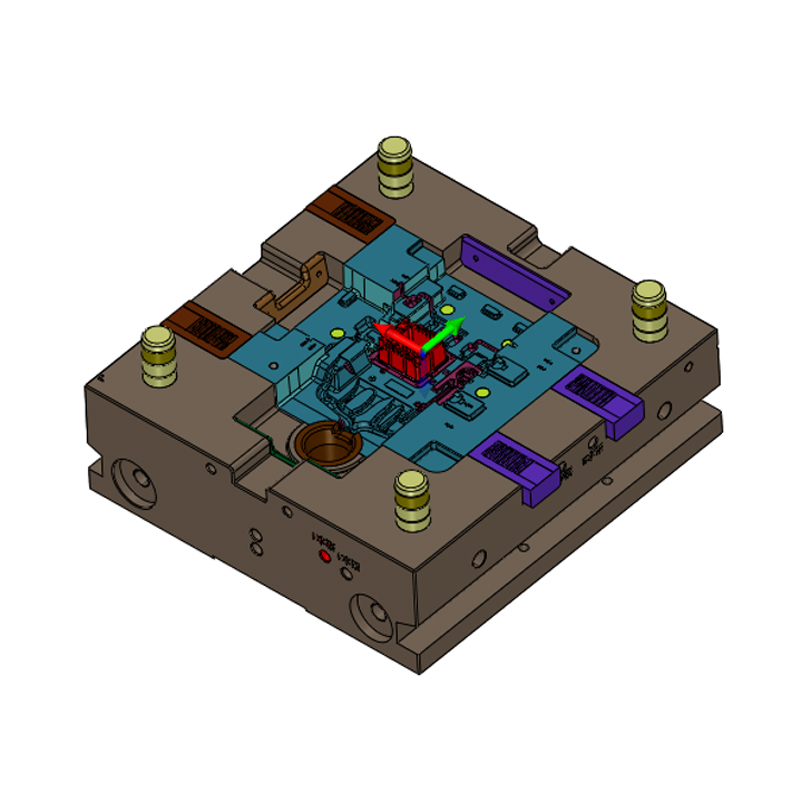
The electric drive unit, which combines a motor with a reduction gearbox, depends on a transmission case that must be rigid, dimensionally precise, and free of oil leaks. It is a classic high-pressure die casting: complex parting line, cast-in bearing seats, and machined sealing surfaces. Because the e-drive unit sits in the vehicle's crash path, the case also carries structural requirements. 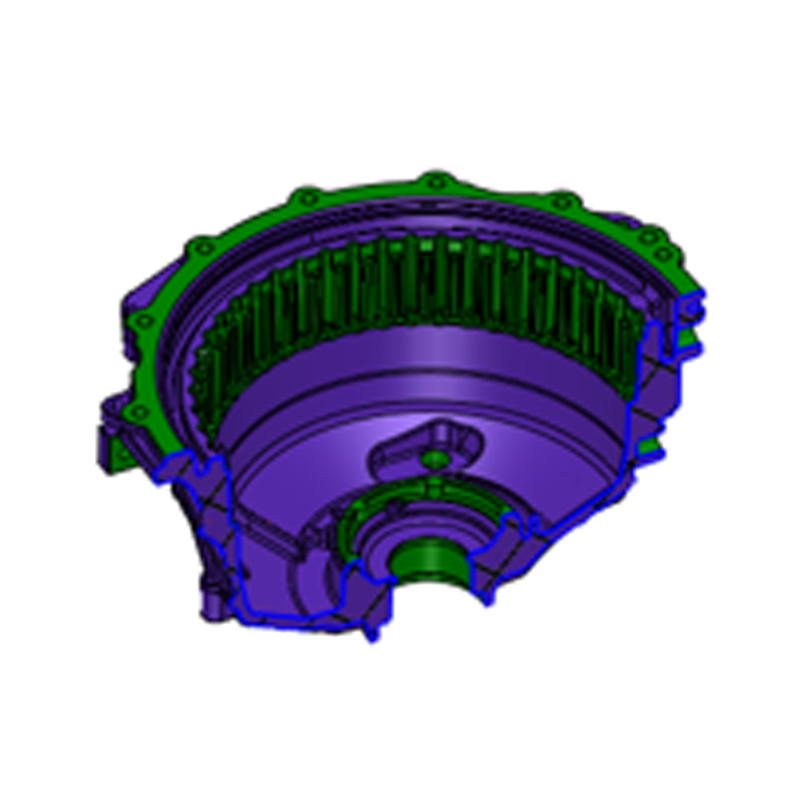 1650T A380 Aluminum Alloy Die-Cast Transmission CaseThis transmission component is die cast with A380 alloy using a 1,650-ton high-pressure machine, delivering strong mechanical strength for e-drive transmission loads. It supports efficient power delivery and durability, aligning with the discussion of rigid, precise, and leak-free transmission cases in electric drive units.View Product → A 1,650-ton die casting machine can produce such a case with thin walls and integrated oil passages, eliminating the many welded parts a steel design would require.
Beyond the three e-drive groups, cast aluminum shows up in electric motor controllers, DC-DC converters, onboard chargers, and cooling water jackets. Each of these needs a housing that conducts heat, shields EMI, and protects electronics from road contaminants. The pattern repeats across every new vehicle platform: aluminum casting converts a thermal, electrical, and mechanical problem into one integrated component.
Cast aluminum parts do not begin at the foundry; they begin at the mold maker. The steel tool defines every dimension, every draft angle, every cooling channel, and every ejector pin mark on the part. For this reason, the quality of a cast aluminum program is largely set before the first shot is fired.
A high-pressure die casting mold is an assembly of steel plates and inserts, typically made of H13 hot-work tool steel hardened to 44–48 HRC, with a cavity machined by CNC and finished by EDM or polishing. The critical design elements are the gating system, overflow wells, venting, cooling lines, and ejection layout. The gate controls how metal enters the cavity; the overflows capture cold metal and trapped air at the end of fill; the vents allow gas to escape; the cooling lines determine solidification rate and therefore cycle time; the ejectors push the casting out without distortion. Poor design in any of these areas creates visible defects: flow lines, cold shuts, porosity, soldering, or shrinkage.
Modern mold engineering uses simulation software to predict metal flow, temperature distribution, and solidification before steel is cut. Filling simulations show where air will be trapped; thermal simulations show hot spots that may shrink. High-vacuum die casting goes a step further: the die is sealed and evacuated before injection, reducing oxygen in the cavity and allowing alloys such as A356 to reach elongations around 7–10% even in thin-wall castings. This is the technical foundation of structural aluminum castings used in body-in-white applications.
For a manufacturer buying cast aluminum parts, the mold is the largest upfront cost and the main scheduling risk. Tooling for a medium-size die casting program typically runs from tens of thousands into hundreds of thousands of dollars, and lead time can be eight to sixteen weeks. The mold also determines what can be changed later: adding a rib, moving a boss, or correcting a tolerance issue after the tool is built is far more expensive than fixing it in the design phase. That is why an experienced aluminum die casting mold manufacturer is involved early in the program, reviewing the part drawing for draft, wall-thickness balance, and gate feasibility before finalizing the design-for-manufacturability report.
Mold maintenance is an operating cost that deserves attention. Thermal cycling cracks die steel over time, aluminum soldering builds up on erosion-prone surfaces, and cooling channels scale with mineral deposits. A professional tooling supplier plans preventive maintenance intervals, keeps spare inserts for high-wear areas, and documents die changes for traceability.
Sourcing cast aluminum parts is a technical exercise, not just a purchasing event. The buyer must decide alloy, process, tolerances, quality limits, and testing before asking for a quote. A clear specification prevents the most common failures: porosity discovered at machining, parts rejected for cosmetic defects, or castings that leak in pressure tests.
A complete drawing and specification for a cast aluminum part should include at least the following items:
The volume forecast drives the process choice. A useful rule of thumb in the industry:
These breakpoints shift with part size. A large motor housing may justify HPDC at only 30,000 units per year because the alternative is machining from billet or permanent-mold casting with long cycles. Let the quotes tell you the crossover point.
Three cost blocks dominate the total price of a cast aluminum part: tooling amortization, the casting operation itself, and secondary processes. Tooling amortization is spread across the forecast volume: if volume doubles, that cost per part halves. The casting operation includes metal price, energy, cycle time, and defect allowance. Secondary processes — machining, X-ray inspection, dye penetrant, anodizing, painting — often exceed the cost of the raw casting, so net-shape design pays twice: once in material and once in machining time.
The most common purchasing risks are worth naming directly. Porosity in HPDC castings can appear only after machining, when a surface is cut into a gas pocket; the fix is controlling the process with vacuum, optimizing gating, or moving to squeeze casting for critical regions. Dimensional drift happens as a die wears; a well-run foundry monitors this with periodic CMM checks and die maintenance. Composition variation between suppliers can change mechanical properties even when the alloy name is the same, so always request a heat-lot certificate on the first article and on every production batch.
Tooling ownership is another point to settle in writing. In many programs, the customer owns the die casting mold and pays for it as a one-time tooling charge, while the foundry maintains it. If the part will be moved to a second supplier, the mold must be portable and complete with its original documentation: CAD files, heat-treatment records, die tryout reports, and maintenance history. Buyers who overlook these details discover late in the program that a third-party tool is unusable without the original design data.
Before approving a supplier, buyers should ask: what is your design-for-manufacturability experience with this part family, what simulation software do you use, how do you control porosity, what is your first-article inspection process, and how many shots do you expect from the tool before maintenance? A supplier that cannot answer these questions in concrete terms will likely discover the answers during your production ramp.
Cast aluminum is a material category defined by melting and solidification in a mold, but the practical meaning of the term changes with the alloy and the process. A sand-cast prototype bracket, a die-cast motor housing, and a squeeze-cast battery plate are all cast aluminum; they simply target different points on the same map of geometry, strength, integrity, and cost.
For engineers, the useful conclusion is that cast aluminum is rarely a default or a compromise. It is the material that wins when a part needs complex geometry, light weight, good heat transfer, and economical production at volume. For buyers, the lesson is that process and tooling decide quality. The mold determines porosity, tolerance, surface finish, and durability; the foundry controls the process; the alloy sets the mechanical ceiling. Choose the three together, and the cast aluminum part will do its job for the life of the vehicle. Choose them poorly, and no amount of inspection will fix a fundamentally wrong set of decisions.
Wangshan Road, Jiangbei District, Ningbo, Zhejiang, China
86-135-64796935
Copyright © Ningbo NKT Tooling Co., Ltd. All Rights Reserved.
 Login
Custom Automotive Aluminum/Zinc Die Casting Molds Manufacturers
Login
Custom Automotive Aluminum/Zinc Die Casting Molds Manufacturers
