
 English
 中文简体
中文简体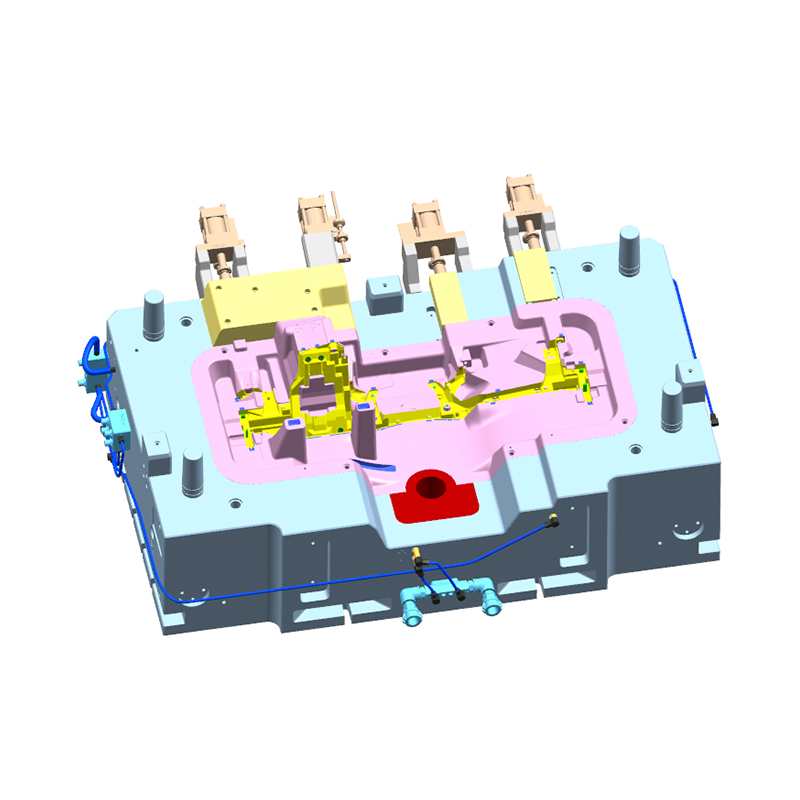





Contact Information
-
 Wangshan Road, Jiangbei District, Ningbo, Zhejiang, China
 -
 86-135-64796935

Get A Quote
How Does Magnesium Alloy Die-Casting CCB Frame Redefine Precision in Conventional Vehicle Die Casting Molds?
2026-01-29
Content
The manufacturing of critical automotive structural components requires an intricate balance between material science and mold engineering. Central to this evolution is the Magnesium Alloy Die-Casting CCB Frame, a component that leverages the high-performance characteristics of magnesium to replace traditional multi-part assemblies. By utilizing advanced Conventional Vehicle Die Casting Molds, manufacturers can achieve a level of structural integration and weight reduction that was previously unattainable.
The Cross Car Beam (CCB) is one of the most complex structural parts in a vehicle, acting as the backbone for the dashboard, steering column, and airbags.
How does the advanced one-piece high-precision die-casting process improve structural integrity?
The Magnesium Alloy Die-Casting CCB Frame adopts advanced one-piece high-precision die-casting process, which eliminates the need for welding or riveting multiple steel or aluminum stampings. By casting the entire frame as a single unit, the internal stress distribution becomes more uniform, significantly enhancing the overall rigidity of the vehicle's cockpit area. This process, facilitated by specialized Conventional Vehicle Die Casting Molds, ensures that there are no weak joints, thereby improving the safety and vibration-damping characteristics of the component.
What are the specific advantages of lightweight and high strength in this frame?
Magnesium is the lightest structural metal available. The product is made of high-performance magnesium alloy with excellent strength-to-weight ratio. This allows the Magnesium Alloy Die-Casting CCB Frame to provide the necessary support for heavy dashboard components while significantly reducing the vehicle's front-end weight. Furthermore, the inherent high strength of the alloy ensures that the frame can withstand the dynamic loads encountered during vehicle operation without deformation.
The dimensions of the CCB frame present unique challenges for mold design and metal flow.
How does the 1×1 single-cavity design ensure molding accuracy?
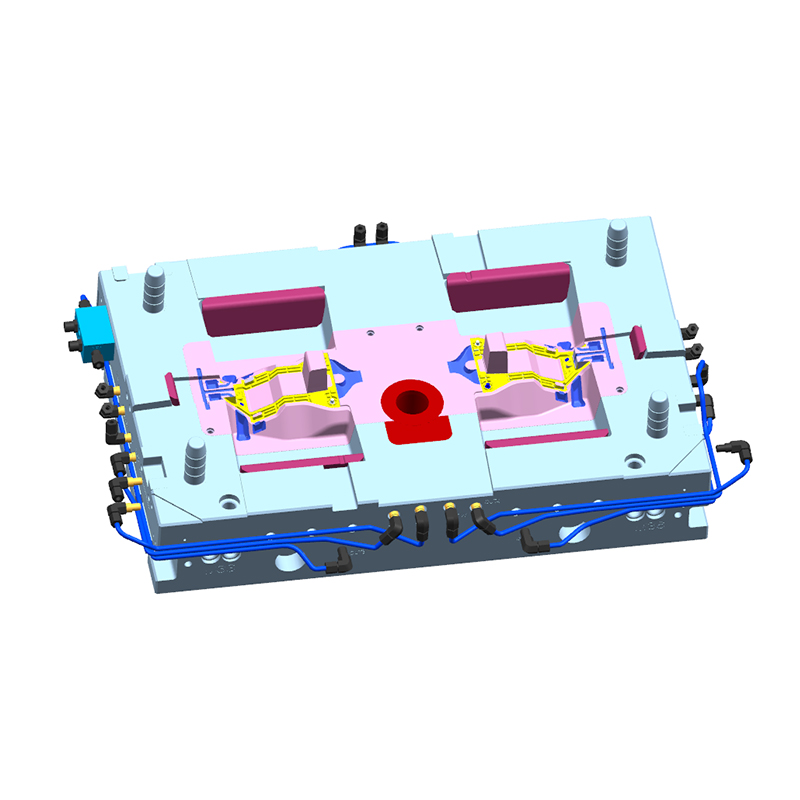
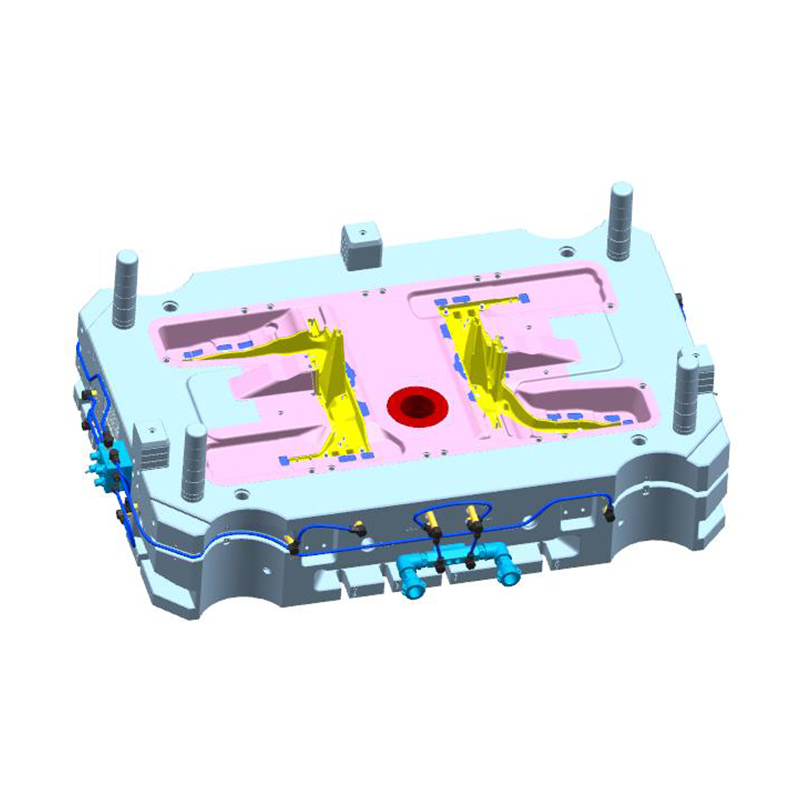
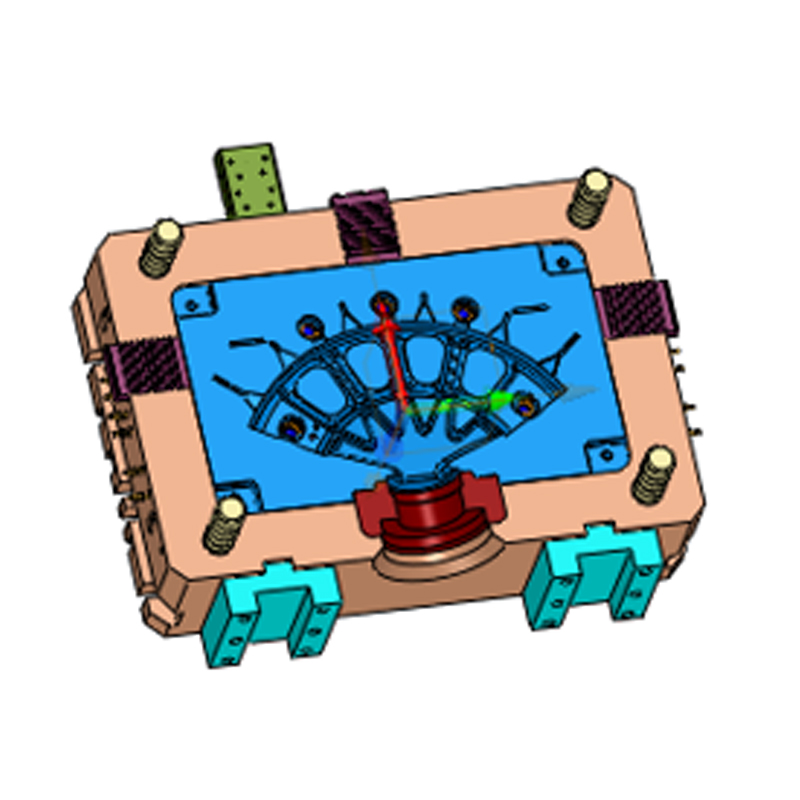
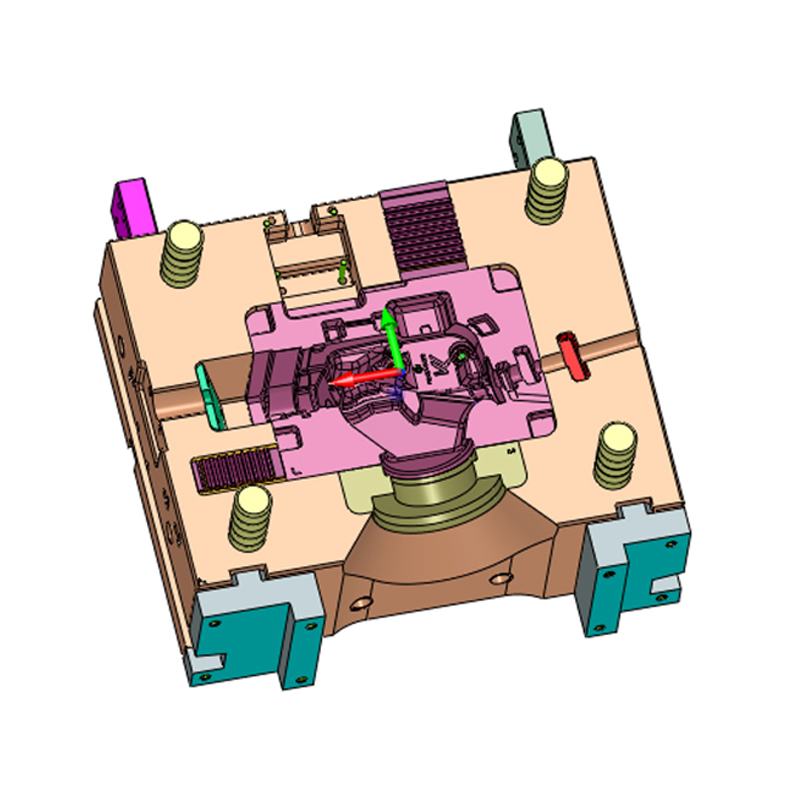
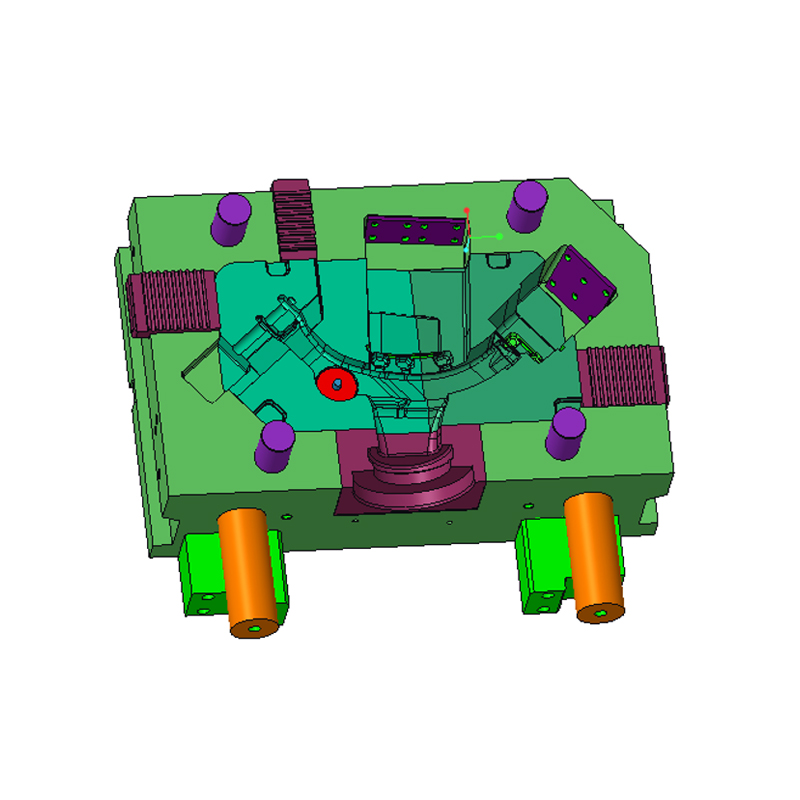
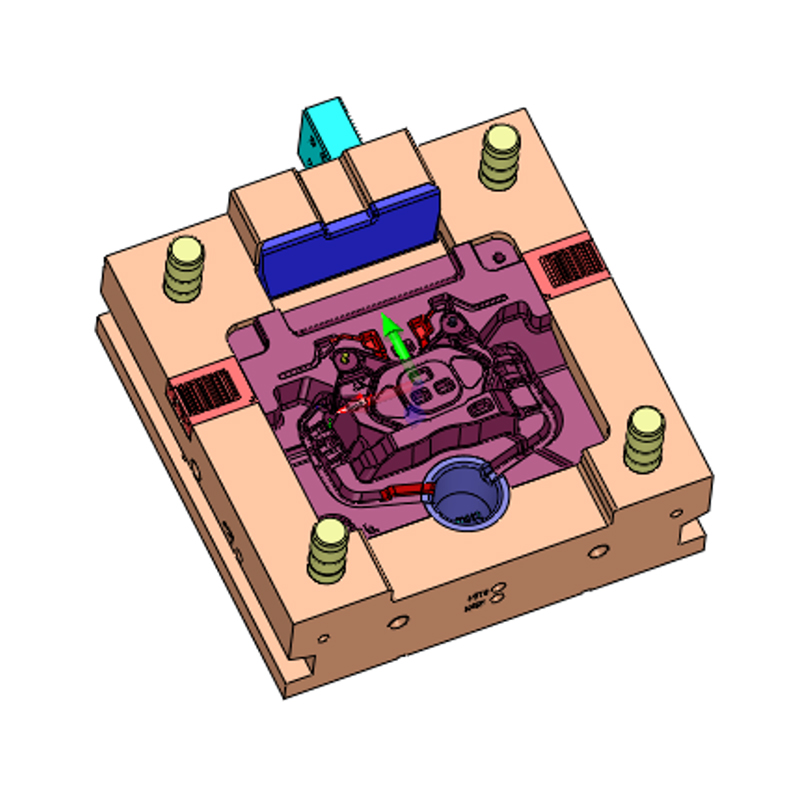
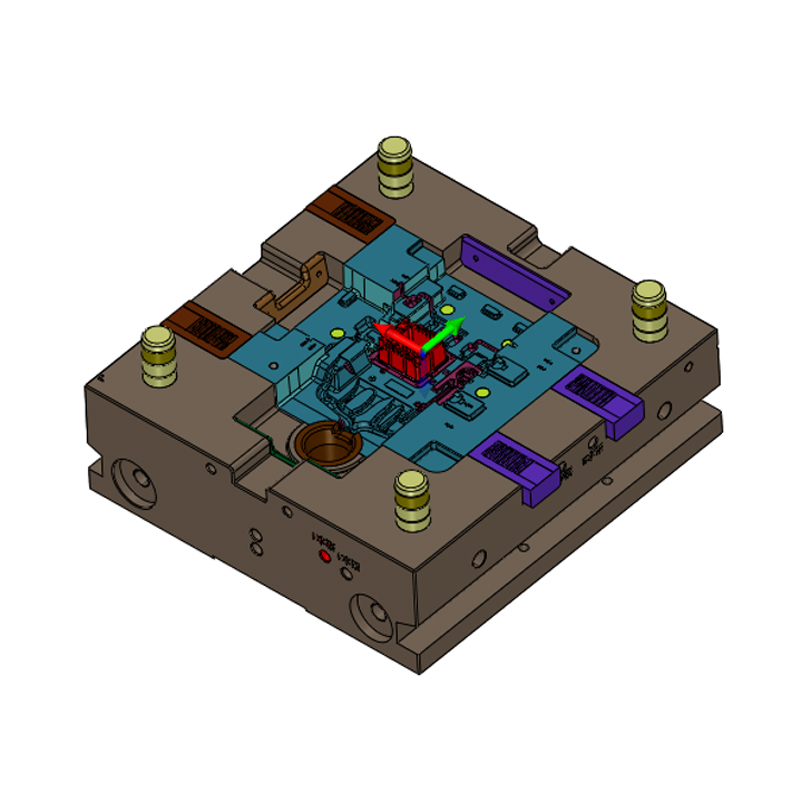
The mold of this product adopts a 1×1 single-cavity design. This layout is critical for such a large component, as it allows the entire clamping force of the die-casting machine to be concentrated on a single part. This concentration is vital for maintaining the dimensional stability of a part with a body size of 1446.6×400.3×514.7mm. In Conventional Vehicle Die Casting Molds, a single-cavity approach minimizes the risk of thermal imbalance, ensuring that the magnesium alloy fills the intricate ribs and mounting points consistently.
Why is the equipment of 4 positions critical for the demoulding process?
Due to the complex structural forming required for a CCB frame, the mold is equipped with 4 positions (sliders/core pullers). These positions effectively respond to the demoulding requirements of complex geometric shapes. Without these precisely timed moving parts within the Conventional Vehicle Die Casting Molds, it would be impossible to release a part with such deep undercuts and varied angles. These 4 positions ensure that the frame is ejected without distortion, preserving the high-precision tolerances required for downstream assembly.
|
Technical Parameter |
Specification Value |
|---|---|
|
Product Name |
Magnesium Alloy Die-Casting CCB Frame |
|
Material |
High-performance Magnesium Alloy |
|
Process Type |
One-piece High-precision Die-casting |
|
Body Dimensions |
1446.6 × 400.3 × 514.7 mm |
|
Mold Dimensions |
2319 × 1370 × 1603 mm |
|
Mold Layout |
1×1 Single-cavity |
|
Mechanism Features |
Equipped with 4 Core-pulling Positions |
|
Mold Category |
Conventional Vehicle Die Casting Molds |
|
Key Performance |
Electromagnetic Shielding & Corrosion Resistance |
While primarily used in automotive sectors, the properties of this specific alloy extend its utility to other high-tech fields.
How does excellent electromagnetic shielding performance benefit power communications?
Beyond structural use, the Magnesium Alloy Die-Casting CCB Frame material is widely used in industrial equipment housings and power communications. Magnesium alloys naturally block electromagnetic interference (EMI). For communication equipment, this means that the housing acts as a shield, protecting sensitive electronic signals from external noise. When cast through high-precision Conventional Vehicle Die Casting Molds, the resulting enclosure is both a structural protector and an electronic insulator.
Does the alloy offer sufficient corrosion resistance for various working environments?
Yes, the product is made of high-performance magnesium alloy with good corrosion resistance. While magnesium was historically sensitive to environmental factors, modern high-purity alloys used in Conventional Vehicle Die Casting Molds are treated and alloyed to resist oxidation. This makes the CCB frame suitable for long-term use in the varied humidity and temperature conditions found within a vehicle's cabin or industrial settings.
The physical scale of the mold necessitates specific infrastructure and machinery.
Why is a mold size of 2319×1370×1603mm necessary for this frame?
The mold size of 2319×1370×1603mm is required to accommodate the 1.4-meter-long CCB frame while leaving sufficient space for the 4 core-pulling positions, cooling channels, and the heavy-duty bolster plates. Such large Conventional Vehicle Die Casting Molds must be engineered with massive thermal mass to resist the heat of the molten magnesium. This size ensures that the mold remains rigid under the thousands of tons of pressure applied during the injection phase.
How does adaptation to large-tonnage die-casting machines improve manufacturing efficiency?
The frame can be adapted to large-tonnage die-casting machines, which are essential for achieving the high injection speeds required by magnesium. Because magnesium loses heat very quickly, it must be injected into the Conventional Vehicle Die Casting Molds at extremely high velocities. Only large-tonnage machines provide the combination of clamping force and shot power needed to fill a 1446.6mm long cavity before the metal begins to solidify, thereby greatly improving manufacturing efficiency and reducing production error.
Precision in the layout is the primary defense against manufacturing defects.
What role does reasonable mold structure and position layout play in quality control?
Through reasonable mold structure and position layout, the flow of molten metal is optimized to reach all sections of the complex structure simultaneously. In the Magnesium Alloy Die-Casting CCB Frame, the placement of the 4 positions is mathematically calculated to balance the pressure within the cavity. This precision within the Conventional Vehicle Die Casting Molds prevents "short shots" (incomplete filling) and reduces internal porosity, which are the most common causes of structural failure in die-cast parts.
How is the molding accuracy and stability of the product guaranteed?
Molding accuracy is a result of the synergy between the high-precision die-casting process and the rigid mold architecture. The single-cavity design ensures that there is no "part-to-part" variation that often occurs in multi-cavity molds. By focusing on a 1×1 layout, Conventional Vehicle Die Casting Molds can be fine-tuned to compensate for the specific shrinkage rates of magnesium alloy, ensuring that every frame produced meets the 1446.6mm specification with sub-millimeter precision.
The ability to create complex shapes is the hallmark of modern die-casting.
How are complex geometric shapes achieved without compromising strength?
The one-piece high-precision die-casting process allows for the inclusion of thin-walled sections reinforced by an intricate network of ribs. These ribs are designed into the Conventional Vehicle Die Casting Molds to provide maximum stiffness where needed while keeping the overall weight low. This complex structural forming is what allows the Magnesium Alloy Die-Casting CCB Frame to replace a dozen stamped steel components with a single, stronger, and lighter part.
Is this technology suitable for precision manufacturing environments?
Absolutely. The product is suitable for precision manufacturing environments where repeatability and high tolerances are mandatory. The use of large-tonnage machines and advanced Conventional Vehicle Die Casting Molds ensures that the production process is highly automated. This automation reduces human error and ensures that the electromagnetic shielding performance and mechanical strength are consistent across every production batch, making it an ideal solution for the automotive structural parts and industrial equipment sectors.
Wangshan Road, Jiangbei District, Ningbo, Zhejiang, China
86-135-64796935
Copyright © Ningbo NKT Tooling Co., Ltd. All Rights Reserved.
 Login
Custom Automotive Aluminum/Zinc Die Casting Molds Manufacturers
Login
Custom Automotive Aluminum/Zinc Die Casting Molds Manufacturers
