
 English
 中文简体
中文简体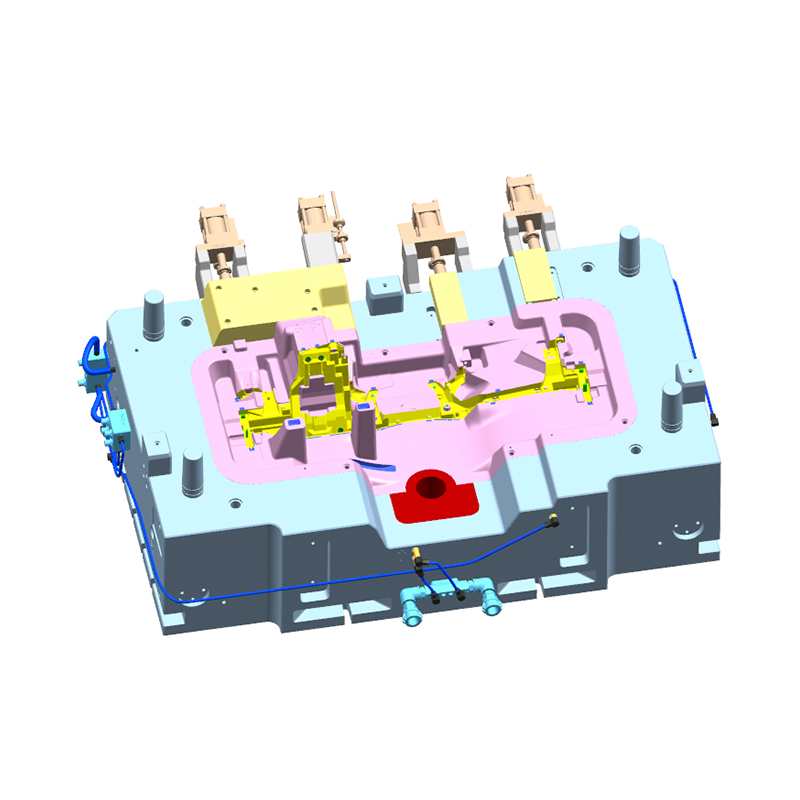



Contact Information
-
 Wangshan Road, Jiangbei District, Ningbo, Zhejiang, China
 -
 86-135-64796935

Get A Quote
How Do New Energy Vehicle Die Casting Molds Enable Large Scale Integration and Structural Integrity in Automotive Manufacturing?
2026-05-21
Content
The transition from traditional internal combustion engine vehicles to modern electric and hybrid transport has forced a massive redesign of vehicle architecture. At the center of this manufacturing shift is the demand for lightweight structures that maximize battery range while ensuring exceptional crash safety. To meet these dual requirements, automotive manufacturers have increasingly turned to large scale integrated structural castings. The production of these massive, complex aluminum components relies entirely on the precision and durability of specialized tooling, which is professionally referred to as New Energy Vehicle Die Casting Molds. These ultra large molds must withstand immense clamping forces, rapid thermal cycling, and high velocity molten metal injection, making their engineering and maintenance a vital factor in modern automotive factory efficiency.
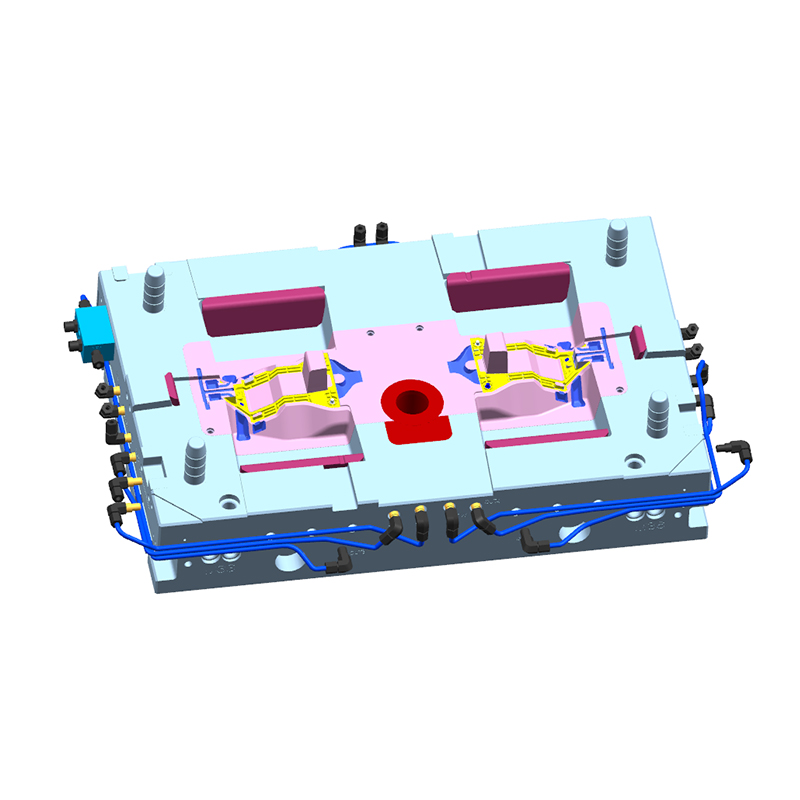
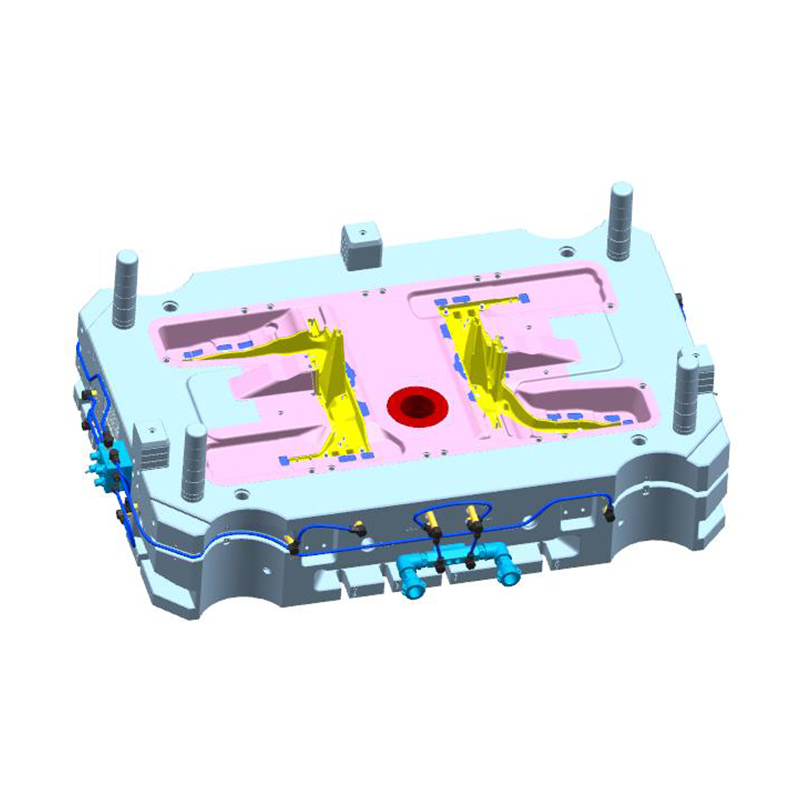
Unlike traditional casting dies that produce small, isolated components such as engine covers or transmission casings, New Energy Vehicle Die Casting Molds are designed to produce entire vehicle segments in a single injection cycle. These components, which include rear underbodies, front shock tower assemblies, and complete battery enclosures, replace dozens of stamped steel parts that previously required complex welding and joining networks. By utilizing permanent steel molds capable of shaping these massive structures, automotive brands can reduce assembly footprints, lower vehicle weight, and improve the structural rigidity of the chassis. Understanding the design engineering, metallurgical requirements, and thermal management of these molds is essential for achieving success in high volume automotive production.
The adoption of integrated casting techniques, which is often described as gigacasting or megacasting, has introduced a new set of engineering challenges that traditional mold makers never had to consider. The sheer scale of the components being cast requires a complete rethinking of mold architecture and fluid dynamics.
Traditional vehicle manufacturing involves stamping multiple steel or aluminum sheets, which are then assembled using hundreds of spot welds, rivets, and adhesive beads. This traditional approach requires a highly complex supply chain and introduces cumulative dimensional errors across the assembly line. New Energy Vehicle Die Casting Molds solve this issue by consolidating these numerous parts into a single, cohesive aluminum casting.
To cast a component as large as a rear underbody, the mold itself must be incredibly massive, often weighing well over one hundred tons. This scale presents significant challenges regarding mechanical stability. When molten aluminum is injected into the cavity, it exerts a tremendous hydraulic pressure that attempts to push the two halves of the mold apart. To prevent flash, which is the unwanted leakage of liquid metal through the parting line, the mold must be locked within casting machines that exert clamping forces ranging from six thousand to over twelve thousand tons. The mold structure must be engineered to distribute these massive clamping forces evenly across the entire parting surface, preventing localized deflection that would compromise the dimensional accuracy of the cast vehicle segment.
Because a single integrated casting can stretch across several meters, maintaining uniform temperature profiles across the entire mold cavity is extremely difficult. Molten aluminum enters the mold at temperatures exceeding six hundred and fifty degrees Celsius, while the external cooling channels attempt to maintain the steel at a stable operating temperature. Because different sections of the cast part have different wall thicknesses, they naturally cool and solidify at different rates.
These uneven cooling rates create severe thermal gradients within the mold steel. The sections of the mold that form thick structural ribs remain hot for longer periods, whereas the sections that form thin outer skins cool almost instantly. These thermal gradients generate significant localized thermal expansion and contraction, which can lead to mold warping and dimensional drift over consecutive casting cycles. If the mold cannot maintain its dimensional stability, the resulting automotive components will not fit within the strict tolerances required for robot automated vehicle assembly. This requires advanced simulation of the thermal behavior of the steel before the mold is manufactured.
The extreme thermal and mechanical demands placed on New Energy Vehicle Die Casting Molds mean that standard tool steels are often inadequate. Mold designers must select high purity, high performance alloys that can withstand the intense cyclic loading of continuous automotive production.
The industry standard for hot work tool steel has traditionally been H13, which is also designated as DIN 1.2344. While H13 remains highly effective for small to medium scale components, the massive scale of integrated new energy vehicle castings requires materials with superior resistance to thermal fatigue and cracking. Premium hot work tool steels, such as those refined through electroslag remelting, are now specified for the main cavity inserts of these giant molds.
Electroslag remelted steels feature an exceptionally clean microstructure with minimal non metallic inclusions. This high purity translates directly into superior isotropic properties, meaning the steel exhibits consistent strength and toughness in all directions. Specialized grades containing optimized percentages of chromium, molybdenum, and vanadium offer increased thermal conductivity and higher hot yield strength. This allows the mold surface to transfer heat more rapidly, reducing the surface temperature peaks that lead to thermal stress cracks, which are commonly known as heat checking.
|
Performance Metric |
Standard H13 Tool Steel |
Electroslag Remelted Premium Steel |
High Molybdenum Super Alloy |
|---|---|---|---|
|
Fracture Toughness |
Moderate impact resistance |
High impact resistance and ductility |
Maximum resistance to catastrophic cracking |
|
Thermal Conductivity |
Standard heat transfer rate |
Enhanced thermal transfer |
Superior heat dissipation capability |
|
Resistance to Heat Checking |
Standard life expectancy |
Extended life under cyclic heat |
Maximum resistance to surface cracking |
|
Structural Homogeneity |
Standard microcleanliness |
Ultra uniform grain structure |
Superior isotropic microcleanliness |
As demonstrated in the comparison, premium tool steels provide the necessary toughness and thermal performance required to prevent catastrophic failure in the high stress zones of large format automotive molds, justifying their higher initial material cost.
Even the finest tool steel will fail prematurely if it is not subjected to an expertly controlled heat treatment process. Because New Energy Vehicle Die Casting Molds utilize massive steel blocks, achieving a uniform microstructure from the surface to the deep core of the block is a major metallurgical challenge.
The heat treatment process begins with vacuum hardening, where the steel block is heated to its austenitizing temperature and then rapidly cooled using high pressure nitrogen gas quenching. The quenching rate must be fast enough to transform the entire block into a tough martensitic structure, yet controlled enough to prevent thermal cracking during the cooling process. For massive inserts, specialized tempering cycles must follow immediately. The steel must undergo at least three separate tempering processes to relieve the immense internal stresses generated by quenching. The final hardness is typically targeted at forty six to forty eight on the Rockwell C scale, which represents the optimal balance between mechanical wear resistance and the fracture toughness required to stop cracks from propagating through the mold block.
The design of the internal channels and entry points within New Energy Vehicle Die Casting Molds is a highly sophisticated branch of fluid dynamics. Because the molten aluminum must travel long distances to fill the massive cavity, the layout of the gating and cooling systems determines the success of the casting process.
In large scale structural casting, the molten aluminum must flow smoothly through a complex network of runners and gates to fill the cavity within fractions of a second. If the metal flow becomes turbulent, it will trap air and vaporized lubricants within the liquid stream, resulting in internal gas porosity. This porosity weakens the structural integrity of the cast automotive part, making it unusable for crash relevant applications.
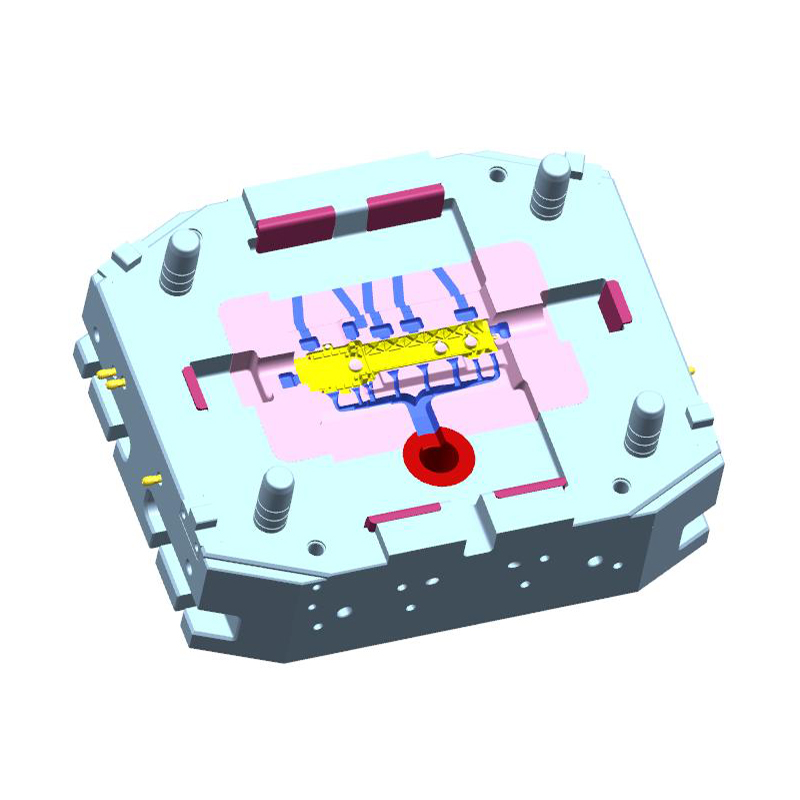
To prevent turbulence, design engineers utilize advanced computational fluid dynamics to shape the runner channels. The runner must gradually decrease in cross sectional area to maintain a steady, pressurized flow front. The gate, which is the narrow entrance where the metal enters the main cavity, must be positioned to distribute the aluminum evenly across all thin wall sections and deep ribs. This precise gating design ensures that the metal front advances in a unified manner, pushing any residual air ahead of it toward the venting channels and vacuum valves, resulting in a dense, pore free structural casting.
Once the mold cavity is completely filled, the aluminum must solidify rapidly and uniformly to maintain a fast production cycle time. Traditional cooling channels are manufactured by drilling straight holes through the steel block, which often leaves deep, complex corners of the cavity without adequate cooling. This limitation leads to hot spots, which prolong the cycle time and increase the risk of shrinkage defects.
To overcome this, manufacturers of New Energy Vehicle Die Casting Molds are increasingly adopting conformal cooling designs. These cooling passages are built using advanced additive manufacturing techniques or by assembling machined steel plates with integrated, curved cooling channels. Conformal cooling paths follow the exact, complex geometry of the mold cavity, maintaining a consistent distance from the molding surface. This uniform heat extraction eliminates localized hot spots, reduces internal thermal stress within the mold, and accelerates the solidification process. Consequently, cycle times are shortened, and the physical properties of the cast aluminum parts are significantly improved due to a more refined grain structure.
The environment inside an automotive die casting plant is harsh and unforgiving. The constant exposure to high temperatures, high pressures, and corrosive chemical agents means that a proactive maintenance and protection strategy is essential for preserving the multi million dollar investment in New Energy Vehicle Die Casting Molds.
During the injection phase, the high velocity flow of liquid aluminum can physically abrade the steel surface and chemically dissolve the iron within the tool steel, a destructive process known as soldering or erosion. Once soldering occurs, the aluminum welds itself to the mold surface, causing severe tearing of the cast part during ejection and requiring immediate machine shutdown for manual cleaning.
To combat soldering, modern mold cavities receive advanced surface treatments and thin film coatings. Physical vapor deposition is used to apply ultra hard, low friction coatings such as chromium nitride or titanium aluminum nitride. These coatings act as an inert chemical barrier, preventing the molten aluminum from contacting and reacting with the underlying iron. Additionally, specialized gas nitriding treatments are applied to increase the surface hardness of the runner channels, providing superior resistance to the abrasive wear caused by the high speed liquid metal stream.
Due to the extreme cyclic loading of the gigacasting process, internal stresses naturally accumulate within the massive steel inserts of New Energy Vehicle Die Casting Molds. If these stresses are allowed to build up unchecked, they will eventually lead to rapid crack propagation and catastrophic mold breakage. Therefore, a strict, data driven maintenance schedule must be enforced.
After a specific number of casting cycles, which is typically determined by sensors embedded within the mold, the tool is removed from the casting machine for a comprehensive inspection and refurbishment. The mold cavity is thoroughly cleaned to remove any lubricant buildup, and the surface is checked for early signs of heat checking using non destructive testing methods such as dye penetrant or ultrasonic inspection.
Importantly, the mold inserts are placed into a stress relieving furnace, where they are heated slowly to a temperature just below the final tempering point and held there for several hours. This thermal treatment allows the metallic lattice of the steel to relax, neutralizing the accumulated tensile and compressive stresses without reducing the hardness of the mold. For areas showing minor thermal cracking, precision laser cladding is utilized to deposit matching tool steel wire, restoring the cavity surface to its original dimensional specifications before the mold is stress relieved and returned to the production line.
Wangshan Road, Jiangbei District, Ningbo, Zhejiang, China
86-135-64796935
Copyright © Ningbo NKT Tooling Co., Ltd. All Rights Reserved.
 Login
Custom Automotive Aluminum/Zinc Die Casting Molds Manufacturers
Login
Custom Automotive Aluminum/Zinc Die Casting Molds Manufacturers
